- Introduction to blood sugar levels
- Why is controlling blood sugar levels so important?
- Who is blood sugar control important for?
- Diabetic patients: How to test your blood sugar levels
- What level should my blood sugar be?
- When to contact the doctor
- How to control blood sugar surges
- Blood sugar control, diet and exercise
- Diseases associated with poor sugar control
- Medications and blood sugar control
Introduction to blood sugar levels
 Our blood glucose level, or blood sugar level, is the amount of glucose (sugar) in the blood. The amount of glucose in the blood is measured in millimoles per litre (mmol/l). Glucose levels are measured most commonly to diagnose or to monitor diabetes. It is also important to keep an eye on blood glucose levels during certain situations – for example: during pregnancy, pancreatitis and with increasing age. Normally, blood sugar levels stay within a narrow range during the day. A good level is between 4 to 8mmol/l. After you consume food, your blood sugar level will rise and after you have had a night’s rest, they will usually be lowest in the morning.
Diabetes is a common disease in our society, affecting 2-5% of the general population, with many more people unaware that they may be affected by this condition. Diabetes results from a lack of insulin, or insensitivity of the body towards the level of insulin present. Thus if you have diabetes, your blood sugar level may move outside the normal limits.
Why is controlling blood sugar levels so important?
Carbohydrate foods are the body’s main energy source. When they are digested, they break down to form glucose in the bloodstream. If you make sure you eat regular meals, spread evenly throughout the day, you will help maintain your energy levels without causing large rises in your blood sugar levels. It is also important to maintain a stable and balanced blood sugar level, as there is a limited range of blood sugar levels in which the brain can function normally. Regular testing of your blood sugar levels allows you to monitor your level of control and assists you in altering your diabetes management strategy if your levels aren’t within the expected/recommended range.
Long term complications, including eye disease, kidney problems, nerve problems, cerebrovascular disease such as strokes, and cardiovascular disease such as heart attacks, heart failure and high blood pressure, can be significantly reduced. Based on studies of people with type 1 diabetes (Diabetes Control and Complications Trial : DCCT) and type 2 diabetes (United Kingdom Prevention of Diabetes – UKPDS), maintaining near normal blood sugars and glycated haemoglobin levels significantly reduces the risks of complications arising from diabetes.
Who is blood sugar control important for?
 Good blood sugar control is important for most people in the general population. However, if you have a condition such as diabetes, pancreatitis, hyperthyroidism / hypothyroidism or Cushing’s syndrome, it becomes even more important to achieve good sugar control. If you are pregnant or planning to become pregnant, it is also essential to maintain good sugar levels to ensure both your own and your baby’s wellbeing.
Stable blood sugar levels significantly reduces the risk of developing diabetic complications at a later date. Depending on the level of control achieved, these problems may start to appear 10 – 15 years after diagnosis with type 1 diabetes and often earlier in patients with type 2 diabetes.
Diabetic patients: How to test your blood sugar levels
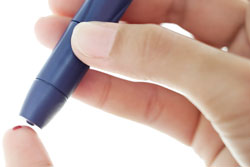
Blood sugar levels are usually measured on a daily basis with a home blood sugar level testing kit. There are several brands and varieties available, but they will all consist of a measuring device and disposable paper strips. To check your blood sugar level, you are usually required to prick your finger tip with a lancet (a small, fine, sharp needle). Then you have to put a small amount of blood on the paper strip and place the strip into the measuring device. After about 15-30 seconds the blood sugar level will be displayed. These blood sugar measuring devices are available at most local pharmacies and also through Diabetes Australia.
There have been new meters that test alternative sites that have been released. These meters allow you to test alternative sites,such as the forearm, upper arm, base of the thumb and thigh. However, testing at different sites may give you results that are different from those obtained from the fingertip. It has been shown that blood sugar levels in the fingertips show changes more quickly than those in alternative testing sites.
People who have type 1 diabetes should measure their blood sugar levels at least once a day, either in the morning before breakfast or at bedtime. Those with type 2 diabetes and are on insulin treatment should also measure their blood sugar levels one – two times a day. For those type 2 diabetics who are on a special diet or oral tablets, blood sugar levels should be measured once or twice a week before mealtime or one to two hours after a meal.
What level should my blood sugar be?
The recommended range of blood sugar levels are:
- 4 to 7 mmol/l before meals.
- < 10 mmol/l one to two hours after meals.
- About 8 mmol/l at bedtime.
When to contact the doctor
When your blood sugar levels are in the extreme ranges – either a fasting blood sugar greater than 15-20mmol/L or less than 3-4mmol/L, and especially if there are two or more abnormal readings, you should seek medical attention. However, you will find out the normal value of blood sugars for your own body and these levels provided are just arbitrary values – some people will feel no symptoms at a level of 20mmol/L whereas others may have symptoms of a high blood sugar such as thirst, urinating frequently, lethargy and vomiting. Regardless, you should contact your local doctor to see if better control of your blood sugar levels can be obtained.
How to control blood sugar surges
If your blood sugar reaches very high levels at any time, you will need to adjust your food intake or insulin dose. Blood sugar levels rise in the blood after breakdown of carbohydrates in the food we consume.
The Glycaemic Index (GI) is a measure of the effect that a carbohydrate containing food has on blood sugar levels, compared to the effect of the same amount of pure sugar, on blood sugar levels. Foods with a low GI (less than 55) means that they cause a slower and lower rise in blood sugar levels. These include types of bread such as mixed-grain and fruit and oat breads, barley, pasta, noodles, beans, sweet potatoes, green peas and milk. Foods with a high GI (greater than 70) means that they cause a faster and higher rise in blood sugar levels. High GI foods include white bread, brown rice, jasmine rice, French fries and coffee.
Limiting your intake of high GI foods will help bring down the average GI of your meal and prevent marked surges in blood sugar. If you are a diabetic, high blood sugar levels may need to be controlled by increased amounts of insulin, if you are already on insulin treatment. If you are only taking tablets to control the blood sugar levels, this may need to be reviewed, to optimize treatment of your diabetes. In any case, high sugar levels can make you feel unwell, with symptoms as described above and you should consult your doctor if this arises.
Blood sugar control, diet and exercise
 Diet and exercise play a very important role in helping control blood sugar levels. Research has shown that by eating a diet with a lower GI and rich in healthy foods, people with diabetes can reduce their average blood sugar levels and reduce the risk of complications. There are various factors that affect the GI of a food. These include: the types of sugar in the food, the way it is prepared, the type of starch, and it’s fat and fibre content. Although you don’t have to avoid all high GI foods, you should try and combine them with low or intermediate GI foods when possible.
Some tips for maintaining a healthy diet and incorporating the GI index into your daily routine include:
- Follow the dietary guidelines for Australians, trying to incorporate a variety of foods into your eating plan.
- Try and use low GI foods instead of high GI foods when possible.
- Try and have at least 3 low GI foods throughout the day, especially during mealtimes.
Physical activity is an important part of optimizing glucose / diabetic control. It has many benefits, including: helping lower blood sugar levels, reducing weight, improving blood pressure and cholesterol levels and also improving muscle strength and stability. It also helps the body decrease it’s insulin resistance and burn excess sugar. The National Physical Activity Guidelines for Australians recommends that at least 30 minutes of moderate intensity physical activity be performed on most days of the week.
If you are thinking about starting regular physical activity, it is important that you slowly build up achievable goals over the next few weeks, gradually increasing the intensity. It is essential to closely monitor your blood sugar levels during physical activity. When you first start exercising, it is recommended that you test your blood sugar levels before, during and after physical activity. This gives you an idea of the way your body responds to exercise. Some of the signs of a low blood sugar level include feeling light headed, faint, sweating and weak. If this occurs, you should stop what you are doing and take some quickly absorbed glucose such as jellybeans or glucose tablets. Everyone is different, so it is important to know how you respond to exercise.
Overall, the long term benefits of eating a good diet and exercising regularly far outweigh the short term excuses and effort that is needed to initiate these changes.
Diseases associated with poor sugar control
Glucose control has been shown to be very important in helping prevent particular diseases, especially if you have diabetes. Studies have been done, which show that in adults with diabetes, persistently elevated blood sugar levels is associated with an increased risk of peripheral arterial disease, (a condition affecting the arteries which results in reduced blood flow). There have also been studies which show that poor blood sugar control and an unhealthy diet is linked to cardiovascular disease (affecting the heart and major blood vessels). This is because the body’s ability to use sugar for energy is not optimized and the blood fats (triglycerides) are increased, leading to cardiovascular disease.
In the long term, poor control of blood sugar levels in diabetic patients leads to both heart and blood vessel disease, kidney failure, nerve damage, eye problems and heart disease. Gaining optimal control over blood sugar levels is therefore essential to ensure that these long term consequences are avoided.
Medications and blood sugar control
 If you are affected by type 2 diabetes, medications may be used as an adjunct to manage your condition at a later stage. Factors such as diet, exercise and loss of weight are very important in managing blood sugars – if you have tried to make changes in all these areas and are still not successful in gaining good control of your blood sugars, there are many types of medications that can help you manage your diabetes. These medications are usually taken orally, to help lower blood sugar levels. There are different classes of medications, which work on different parts of the body, to try and alter the levels of insulin and sugar in the body.
Biguanides
Biguanides are becoming increasingly popular in helping patients with diabetes gain control over their blood sugars, especially in those who are overweight. For example: Glucophage, Diabex and Diaformin (Metformin) belong to this class. These medications work by helping the body use insulin more effectively. Some side effects include nausea, diarrhoea and on rare occasions – lactic acidosis, especially in patients who have kidney, liver or heart disease.
Sulfonylureas
Sulfonylureas are one of the commonly prescribed medications to help control diabetes. This group of medication works by acting on cells, to help your body make insulin. Some examples of this group include: Daonil (Glibenclamide) and Diamicron (Glicazide). They have few side effects, such as bloating, weight gain, allergic skin rashes and gastrointestinal disturbances (ie nausea, diarrhoea) and should be avoided by people who are allergic to sulpha. Due to the fact that this class of drugs increases the release of insulin, an important side effect to be aware of is hypoglycaemia. You should learn to recognize the signs and symptoms that you experience when your blood sugar levels are low – light headedness, sweating, hunger, etc.
Alpha-glucosidase inhibitors
This group includes medications such as Glucobay (Acarbose), which work by blocking an enzyme called alpha glucosidase, resulting in a slower absorption of sugar in your digestive system. These medications are often used in combination with another diabetes medication, such as a biguanide or sulfonylurea. Alpha glucosidase inhibitors are often associated with side effects such as abdominal discomfort and flatulence.
Thiazolidinediones
Thiazolidinediones act to make cells more sensitive to insulin. Examples of this group of medication include: Avandia (Rosiglitazone) and Actos (Pioglitazone). Side effects which may be experienced with this group of medication include: swelling (retention of fluid), weight gain, and liver problems.
Meglitinides
This is a newer group of oral agents developed to help control blood sugar levels. Novonorm / Prandin (Repaglinide) work by causing a rapid, transient increase in insulin secretion from the pancreas, helping control blood sugar especially after meals. It is usually taken with meals and adjusted according to the number and timing of meals eaten. Some side effects that may be experienced include: nausea, diarrhoea and blurred vision.
Insulin
Insulin is the body chemical that is responsible for lowering blood sugar levels and in patients with type II diabetes the body becomes resistant to its effects and can eventually stop producing it at all. So if your blood sugar levels are not controlled well enough on antidiabetic tablets, then your doctor many consider using insulin injections, along with your tablets, to lower it.
You will usually start on a fairly small injected dose of long-acting insulin, or a mixture of long and short acting insulins, which will have an effect for up to 24 hours. These injections are often given in the morning, the evening, or both, but always at the same time. The dose starts at around 10 units per day (although this will vary from person to person) and is injected below the skin (not into the muscle) of the arm, belly or thigh. This can be extremely effective in lowering blood sugar levels, but precautions must be taken because if too much insulin is given there is the risk of your blood sugar going too low and causing a ‘hypoglycaemic’ episode. To avoid this, measurements of blood sugar level should be taken at least once every day and preferably more often. One reason for this is to make sure that the dose is as effective as possible, because it means adjustments to the dose can be made by the patient every few days.
Below is a table describing one system, although your doctor may prefer a different method and they should always be consulted if you are unsure about what dosage is correct for you.
| Fasting blood sugar for the previous 3 consecutive days |
Titration every 3 days; managed by the patient |
|---|---|
| < 5.5 mmol/l | No change or reduction of 2 units (at the discretion of the investigator) |
| 5.5–6.7 mmol/l | No change or increase of 2 units (at the discretion of the investigator) |
| > 6.7 mmol/l | Increase of 2 units |
It is important to know that this should always be concurrent with frequent blood glucose measurement and discussion with a physician.
More information
 |
For more information on nutrition, including information on types and composition of food, nutrition and people, conditions related to nutrition, and diets and recipes, as well as some useful videos and tools, see Nutrition. |
References
- Australian Medicines Handbook: Insulin [online]. July 2007 [cited 3 September 2007]. Available at: URL link
- Bate K, Jerums G. Preventing complications of diabetes. MJA. 2003; 179 (9): 498-503.
- Couper J, Prins J. Recent advances in therapy of diabetes. MJA. 2003; 179 (8): 441-447.
- Davies M, Storms F, Shurler S, et al. Improvements of glycemic control in subjects with poorly controlled diabetes: Comparison of two treatment algorithms using insulin glargine. Diabetes Care. 2005; 28(6):1282-88.
- DeWitt D, Hirsch I. Outpatient insulin therapy in type 1 and type 2 diabetes mellitus. JAMA. 2003; 289(17):2254-64.
- Hoffman L, Nolan C, Wilson D, et al. The Australasian Diabetes in Pregnancy Society consensus statement on gestational diabetes mellitus management guidelines. MJA. 1998: 169; 93-97.
- Kumar P, Clark M (eds). Clinical Medicine. United Kingdom: WB Saunders; 2002.
- Longmore JM, Hope RA, Longmore M, et al. Oxford Handbook of Specialties. USA: Oxford University Press Inc; 2001.
- MIMS Australia. Insulin glargine (Lantus) [online]. May 2006 [cited 3 September 2007]. Available at: URL link
- Murtagh J (ed). General Practice: Diabetes. Australia: McGraw-Hill Australia Pty Ltd; 2003.
- Rao P, Gatlin W. Perioperative management of the patient with diabetes. Surgery. 2002; 77-81.
- Rohlfing C, Wiedmeyer, H, Little R, et al. Defining the relationship between plasma glucose and HbA(1c): Analysis of glucose profiles and HbA(1c) in the Diabetes Control and Complications Trial. Diabetes Care. 2002; 25:275.
All content and media on the HealthEngine Blog is created and published online for informational purposes only. It is not intended to be a substitute for professional medical advice and should not be relied on as health or personal advice. Always seek the guidance of your doctor or other qualified health professional with any questions you may have regarding your health or a medical condition. Never disregard the advice of a medical professional, or delay in seeking it because of something you have read on this Website. If you think you may have a medical emergency, call your doctor, go to the nearest hospital emergency department, or call the emergency services immediately.
Related Articles

Digestive conditions are prevalent and can significantly impact…
Blood pressure is a crucial factor in overall…
Heart issues, such as heart disease and stroke,…
Need a health appointment?
Find and book a doctor, dentist, physio and more on Healthengine
Find a practitioner