- Introduction
- Prevalence of breastfeeding amongst Australian women
- Impact of work and childcare on women’s breastfeeding decisions
- Why encourage breastfeeding in the workplace?
- Laws relating to breastfeeding in the workplace
- Creating breastfeeding-friendly workplaces
- Benefits of breastfeeding in the workplace
- Tips on how to breastfeed at work
Introduction
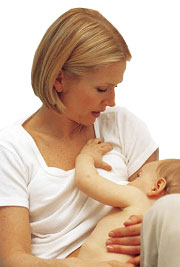 Combining work and breastfeeding can create considerable pressures for working women with newborn babies. As a result, working mothers are less likely to breastfeed their babies than non-working mothers.
Each year an estimated 118,000 Australian women return to paid work within 6 months of delivering a child, that is, at the time when it is recommended that they breastfeed their infant exclusively (feed them breastmilk and nothing else) to provide them with optimal nutrition. For these women, breastfeeding at work is necessary if they are to breastfeed regularly enough to maintain a supply of breastmilk sufficient to enable exclusive breastfeeding and workplace support is necessary to allow them to breastfeed at work. However, some workplaces are not “breastfeeding friendly”, that is, there are barriers which prevent women from breastfeeding in these workplaces.
Prevalence of breastfeeding amongst Australian women
Over 90% of Australian women initiate breastfeeding after childbirth, 56% continue breastfeeding until their child reaches 6 months of age and 30% are still breastfeeding 12 months after childbirth. However, amongst those who continue breastfeeding until 6 months of age, only 20% continue breastfeeding exclusively (use breastmilk as the sole source of infant nutrition and do not feed infants with complementary foods).
Impact of work and childcare on women’s breastfeeding decisions
While evidence suggests that returning to work is not the key reason women cease breastfeeding, working mothers are less likely to breastfeed than those who do not work. For example, one study found that women working fulltime three months after childbirth had breastfed their infants for a shorter period of time (8.6 weeks less) than women who were not working three months after childbirth. Another reported that women who returned to work within 12 weeks of childbirth were twice as likely not to breastfeed their infants, while women who went back to work within six weeks of childbirth were four times less likely to breastfeed, compared to non-working women. This indicates that women face considerable challenges in providing breastfeeding and maintaining paid employment.
Higher breastfeeding rates amongst women with flexible working conditions (e.g. self employment, flexible hours) and those working <15 hours per week, indicate that workplace flexibility is an important factor influencing a working woman’s decision to breastfeed. Breastfeeding rates are higher amongst infants who receive parental care only, compared to those who receive non-parental care. This indicates that childcare facilities (compared to parental care) may not provide adequate opportunities for women to feed their infants with breastmilk.
Why encourage breastfeeding in the workplace?
 Encouraging new mothers to breastfeed is important as breastmilk is the optimum source of nutrition for infants. Breastmilk is a living tissue which contains all the nutrients needed by infants. Breastmilk cannot be reproduced artificially. Its nutritional composition changes naturally as breastmilk production progresses (the infant ages) and according to a diurnal rhythm (a daily rhythm, for example the nutritional content of breastmilk may be different in the morning compared to at night). In the first few days after childbirth women secrete a substance known as colostrum, which contains higher concentrations of vitamins A and B and protein and lower concentration of fat compared to mature breastmilk. Lactating women commence secreting mature breastmilk 7-14 days after childbirth.
Breastmilk production is stimulated by infant suckling, as the suckling action of an infant stimulates the release hormones called prolactin and oxytocin. These hormones are produced by the pituitary gland and regulate the production and secretion of breastmilk respectively. When an infant suckles, oxytocin stimulates the secretion of breastmilk and signals the pituitary gland to secrete prolactin, which in turn stimulates the production of more breastmilk.
The amount of breastmilk a woman produces is therefore directly proportional to the extent to which her infant suckles or she expresses breastmilk (the rate at which milk is emptied from the breast). Frequent suckling and on-demand feeding patterns are associated with maintenance of adequate levels of breastmilk to enable exclusive feeding. In order to produce sufficient breastmilk for exclusive infant feeding, a woman must breastfeed regularly throughout the day. Taking long breaks from breastfeeding (e.g. an eight hour break in which the mother is away from the infant for fulltime work commitments) disrupts breastmilk production and exclusive breastfeeding is not possible under these circumstances. Working women therefore need to breastfeed their babies or express their milk while they are at work, in order to maintain adequate breastmilk production for optimal infant feeding.
Laws relating to breastfeeding in the workplace
The rights of women to breastfeed without discrimination and the rights of infants to receive optimum nutrition from breastmilk, are internationally recognised by bodies such as the World Health Organisation and the United Nation Children’s Fund (UNICEF).
Under Australian laws, employers are obliged to seriously consider any request from an employee for family-friendly working arrangements (including time for breastfeeding). In addition, employers have an obligation to provide work flexibility to enable parents to maintain a healthy balance between work and life, wherever the nature of the work makes it reasonable to do so.
More information on Work and Parenting.
Despite laws requiring employers to reasonably consider flexible arrangements for working parents, Australian women are not legally guaranteed the right to take breaks from work to breastfeed or to breastfeed in public places (including workplaces). As such, female employees who wish to breastfeed at work must negotiate individually with their employees for the right to do so. In addition, many women do not currently have access to maternity leave immediately after childbirth, the time when breastfeeding patterns are established. However, the introduction of a government funded universal parenting leave benefit in Australia from 1 January 2011 is expected to increase women’s access to paid maternity leave.
Creating breastfeeding-friendly workplaces
 A breastfeeding friendly workplace is one in which women:
- have access to a suitable facility in which they can breastfeed their infant or express their breastmilk;
- are provided breaks from work in order to breastfeed or express milk; and
- can discuss their breastfeeding needs with their employer.
The Australian Breastfeeding Association now manages an accreditation program for breastfeeding-friendly workplaces. The program offers consultancy services to assist employers in identifying barriers to breastfeeding in the workplace and accreditation to those employers who successfully remove these barriers and create breastfeeding-friendly workplaces.
Developing a workplace breastfeeding policy
Providing any of the following arrangements or facilities could make the workplace more breastfeeding friendly:
- Lactation breaks: to enable breastfeeding women time off work in order to breastfeed. Lactation breaks should occur in addition to, not instead of, normal meal and tea breaks. Two 30 minute breaks per 8 hour working day should be provided, although there is no legal requirement that employees receive pay for lactation breaks;
- Breastfeeding and expressing facilities: which can be used by breastfeeding employees. The facilities should be clean, comfortable and private and include hand washing and milk storage facilities;
- Offering flexible working arrangements: including job sharing, extended unpaid maternity leave and part time work which may more easily enable women to return to work and breastfeed simultaneously; and
- Workplace support: to ensure that breastfeeding employees feel comfortable to breastfeed in the workplace and do not suffer discrimination or harassment as a result of doing so.
Companies that wish to develop breastfeeding-friendly policies might begin by:
- Conducting a safety audit to determine the extent to which it is safe to breastfeed in the workplace;
- Examining the informal practices which occur in the workplace and how they influence a woman’s ability to breastfeed;
- Ensuring women who have given birth or are planning to have access to flexible work arrangements, such as part time work or job sharing;
- Ensuring the workplace is free of harassment and discrimination against women who choose to breastfeed, for example by addressing women’s right to breastfeed in the workplace as a specific component of workplace training; and
- Examining measures other companies have taken to make their workplaces more breastfeeding friendly.
Benefits of breastfeeding in the workplace
Research shows that women who find a balance between work and family are more likely to breastfeed for longer and that longer duration of breastfeeding has potential benefits for employers. Thus creating breastfeeding-friendly workplaces and receiving accreditation as a breastfeeding friendly workplace has numerous potential benefits for employers, as well as for employees and their families.
Reduced maternal absenteeism
 Breastfeeding is associated with improved infant and child health, as exclusive breastfeeding for the first six months and continued breastfeeding for at least the first 12 months of life provides infants with optimum nutrition. Because of this, breastfed infants experience fewer health conditions later in life and this may reduce absenteeism amongst mothers in the future, as they will require less time off work to care for sick infants. For example, a study from the United States reported that mothers of breastfed infants were three times less likely to take a one day break from work to care for a sick infant or child, than those who did not breastfeed.
Improved employer-employee relations
Employers may also benefit from making their workplaces more breastfeeding friendly, by improving their relationships with their employees. Creating a breast-feeding friendly workplace is one way in which employers can demonstrate a commitment to equal opportunity and corporate responsibility. It may therefore improve employer-employee relations, as it is a way in which employers can acknowledge and respond to the needs of their employees. This may also contribute to improved staff retention and recruitment and greater workplace diversity.
Staff retention and lower recruitment and training costs
In addition, employers who facilitate breastfeeding will make their workplaces more family friendly. Family-friendly workplaces are also associated with increased staff retention (particularly for skilled staff) and therefore lower recruitment and training costs, improved employee productivity and a more diverse workforce. Women who work in breastfeeding-friendly workplaces may return to work earlier after childbirth. Providing a family-friendly workplace may also improve employee morale.
Tips on how to breastfeed at work
Be familiar with workplace legislation on breastfeeding
Women have a right to breastfeed at work (although each woman must individually negotiate her entitlements) and employers must grant breastfeeding and lactation breaks to working women if such breaks are reasonable according to the nature of the woman’s work. It is important that women wishing to breastfeed at work are aware of this right, so that they are well positioned to negotiate breastfeeding entitlements with their employees.
Negotiating breastfeeding with employers
 As laws regarding breastfeeding in Australia are open to interpretation, women need to negotiate individually with their employer. Ideally women should discuss their intention to return to work and breastfeed (or express breastmilk) before they go on maternity leave and contact their employer again at least two months before their intended return to work. Before negotiating with an employer, women should:
- Be familiar with the facilities they require to assist them to breastfeed or express breastmilk in the workplace, which may include:
- A private room (not a toilet);
- A comfortable place to sit;
- Storage space for a breast pump; and
- A refrigerator in which expressed breastmilk can be stored.
- Be familiar with their breastfeeding or expressing schedule so that they can negotiate breaks for breastfeeding at appropriate times. This might include considering:
- Whether the infant will be bought to the workplace for feeding, the woman will leave the workplace to go to the infant or breastmilk will be expressed at work for later feeding;
- How often it will be necessary to express milk or breastfeed;
- At what times it will be necessary to breastfeed;
- Whether additional breaks will be needed. It is important for breastfeeding women to note that although Australian laws do not oblige employers to do so, the International Labour Federation recommends that women who need to breastfeed at work should be offered breaks in addition to normal lunch and tea break to enable them do so;
- Whether they require breaks during work or other types of flexible work arrangements including part time work or working from home;
- Identify the correct person to negotiate breastfeeding facilities and breaks with. This may be the woman’s manager or the company’s human resources department or equal opportunity officer.
Arrange childcare close to work
Arranging childcare for the infant close to the mother’s workplace may overcome some of the barriers which prevent women breastfeeding whilst at work. It enables the infant to be bought to the workplace (or the mother to move to the childcare facility) at breastfeeding times.
Try expressing milk if it is not possible to breastfeed at work
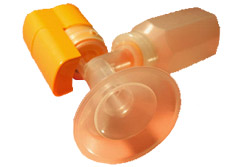
Women who are unable to move their infant to their workplace for each feed may choose to express and store their breastmilk so that it can be fed to the infant from a bottle or cup. Breastfeeding friendly workplaces should incorporate facilities for expressing and storing milk, as well as for breastfeeding. Women who are considering expressing milk should be advised to start expressing several weeks before they return to work so they can practice and become familiar with how long it takes them to express their milk. They will also need to negotiate with their employer to ensure the necessary facilities, including a comfortable place for expressing and a refrigerator for storing expressed breastmilk, are available in the work place.
 |
For more information, see Expressing Breastmilk. |
Contact an organisation for assistance
Women who are planning to have a child or are currently breastfeeding may find support to combine work and breastfeeding from the Australian Breastfeeding Association. The association has also recently launched a Breastfeeding Friendly Workplace Accreditation scheme, which may enable women to identify breastfeeding friendly workplaces, or give employers greater incentive to make their workplace breastfeeding friendly. Employees who are members of unions should also check to see what support their union provides.
More information
 |
For more information on workplace health including office ergonomics series, useful tips on avoiding injuries in the workplace and costs on the workforce, see Workplace Health. |
 |
For more information on breastfeeding including nutrition and contraception during breastfeeding and useful animations, see Breastfeeding. |
References
- Baxter J. Breastfeeding, employment and leave: An analysis of mothers in Growing up in Australia. Fam Matters. 2008;80(2):17-26. [Abstract]
- Breastfeeding friendly workplace accreditation [online]. East Malvern, VIC: Australian Breastfeeding Association; 9 September 2007 [cited 25 March 2010]. Available from: URL link
- Dietary guidelines for children and adolescents in Australia, incorporating the infant feeding guidelines for health workers [online]. Canberra, ACT: National Health and Medical Research Council; 2003 [cited 25 March 2010]. Available from: URL link
- Fein SB, Roe B. The effect of work status on initiation and duration of breast-feeding. Am J Public Health. 1998;88(7):1042-6. [Abstract | Full text]
- Guendelman S, Kosa JL, Pearl M, et al. Juggling work and breastfeeding: Effects of maternity leave and occupational characteristics. Pediatrics. 2009;123(1):e38-46. [Abstract | Full text]
- Breastfeeding and returning to work: Off to a good start [online]. Edinburgh: NHS Health Scotland; 1999 [cited 30 March 2010]. Available from: URL link
- Flexible work for work-life balance [online]. Melbourne, VIC: Victoria Equal Opportunity and Human Rights Commission; 2008 [cited 28 March 2010]. Available from: URL link
- Breastfeeding at work: Work life balance fact sheet 9 [online]. West Perth, WA: Government of Western Australia Department of Commerce; 2009 [cited 30 March 2010]. Available from: URL link
- ABA’s five year plan for Australia to protect and promote the initiation and increased duration of breastfeeding [online]. East Malvern, VIC: Australian Breastfeeding Association; 14 January 2005 [cited 30 March 2010]. Available from: URL link
- Media release: Budget 2009-10: Rudd government delivers paid parental leave [online]. Canberra, ACT: Australian Government Department of Education, Employment and Workplace Relations; 12 May 2009 [cited 30 March 2010] Available from: URL link
- Breastfeeding in the workplace [online]. Brisbane, QLD: Queensland Government Department of Education and Training; 1 December 2009 [cited 25 March 2010]. Available from: URL link
- Flexible work for work-life balance [online]. Melbourne, VIC: Victoria Equal Opportunity and Human Rights Commission; 2008 [cited 28 March 2010]. Available from: URL link
- Applebaum E. Work/life balance policies in a declining economy: Are they still win/win? Presented at the Bradley Forum, University of South Australia; 12 August 2009. [Abstract]
- Breastfeeding friendly workplace: Negotiating with you employer [online]. East Malvern, VIC: Australia Breastfeeding Association; 2010 [cited 15 April 2010]. Available from: URL link
- Breastfeeding when you are working or away from your baby [online]. Brisbane, QLD: Queensland Government Department of Health; 2009 [cited 30 March 2010]. Available from: URL link
- Breastfeeding and work: Information for employers and employees [online]. London: National Health Services UK; April 2008 [cited 30 March 2010]. Available from: URL link
- Can you return to work and still breastfeed? [online]. East Malvern, VIC: Australian Breastfeeding Association; 15 January 2005 [cited 30 March 2010]. Available from: URL link
All content and media on the HealthEngine Blog is created and published online for informational purposes only. It is not intended to be a substitute for professional medical advice and should not be relied on as health or personal advice. Always seek the guidance of your doctor or other qualified health professional with any questions you may have regarding your health or a medical condition. Never disregard the advice of a medical professional, or delay in seeking it because of something you have read on this Website. If you think you may have a medical emergency, call your doctor, go to the nearest hospital emergency department, or call the emergency services immediately.
Related Articles


Need a health appointment?
Find and book a doctor, dentist, physio and more on Healthengine
Find a practitioner