- What is the FAILSAFE diet?
- History of the FAILSAFE diet
- Foods eliminated from a FAILSAFE diet
- Foods included in a FAILSAFE diet
- Eating plan for the FAILSAFE diet
- The FAILSAFE diet for ADHD
- Evidence for the FAILSAFE diet
- Benefits and limitations of FAILSAFE for children with ADHD
What is the FAILSAFE diet?
FAILSAFE stands for Free of Additives, Low in Salicylates, Amines and Flavour Enhancers. It is a diet which focuses on reducing your intake of three chemical compounds that occur naturally in many fresh foods, as well as food additives and preservatives. These chemical compounds are:
FAILSAFE and other similar diets are also known as elimination diets. The compounds eliminated from the FAILSAFE diet cause adverse reactions (e.g. hives) in food intolerant individuals, and can also lead to mood disorders including attention deficit hyperactivity disorder (ADHD), digestive disorders and sleeping problems in this group.
The aim of following a FAILSAFE diet is therefore to reduce food intolerance and its symptoms by eliminating, or significantly reducing, an individual’s intake of salicylates, amines and artificial additives.
History of the FAILSAFE diet
Scientists at Sydney’s Royal Prince Alfred Hospital began developing the FAILSAFE diet in the 1970s in response to evidence that foods containing artificial compounds, salicylates and amines exacerbate allergic skin reactions.
In the 1950s, scientists conducted trials which demonstrated that aspirin, a salicylate-containing analgesic, could cause or worsen skin irritations and allergies in people with food intolerance.
In the 1960s and 1970s, many food additives (e.g. tartrazine) were tested and were similarly shown to cause allergic reactions. Scientists also noted that many individuals who had adverse reactions to aspirin also had adverse reactions to tartrazine and other food additives.
In the 1970s, nutritionists and allergists began to develop and trial diets that eliminated foods containing additives and salicylates. Many of these proved successful in reducing or eliminating allergic reactions in food intolerant individuals. For example, in 1976 a diet which eliminated salicylates, preservatives and azo dyes was shown to reduce allergic symptoms in 57% of participants, and completely eliminate symptoms in 24%. However, little was known at the time about the natural salicylate content of many foods, and thus completely eliminating salicylates from a diet was not possible.
The development of the FAILSAFE diet involved testing the salicylate content of a large number of food products commonly consumed in Australia (e.g. spices, fruits). These experiments identified fresh fruits and vegetables, tea, spices, peppermint and liquorice as containing high levels of salicylates, and therefore as food which should be eliminated from the diets of food intolerant individuals. Existing elimination diets were then modified to eliminate foods previously unknown to contain salicylates (e.g. curry powder). A number of other natural and artificial compounds that contribute to allergic reactions were also identified during the development of the FAILSAFE diet.
Foods eliminated from a FAILSAFE diet
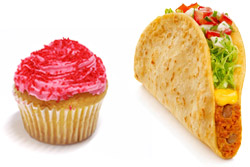 The FAILSAFE diet eliminates all foods containing salicylates and amines, as well as foods that include many types of artificial colours, preservatives and flavours.
As many fresh foods contain naturally occurring salicylates and most processed foods contain artificial additives, this means eliminating many foods which are frequently consumed as part of a typical balanced diet. Specifically, an individual adhering to the FAILSAFE diet should avoid the following additives, in addition to natural sources of salicylates (e.g. most fresh fruits):
- Colours
- All artificial colours
- Natural colour 160b (annatto)
- Preservatives
- Synthetic antioxidants
- Gallates 310–312
- Tertiary butylhydroquinone (TBHQ), butylated hydroxyanisole (BHA), butylated hydroxytoluene (BHT) 319–321
- Flavour enhancers
- Glutamates, including MSG 620–625
- Ribonucleotides 627, 631, 635
- Hydrolysed vegetable protein
- Artificial flavours
In practical terms, this means avoiding many prepared and fresh foods, including:
- Fruit: All fruits except pears with the peel removed
- Take away foods: Food from major fast food chains, fish and chips shops, pizza, hot dogs, barbeque chicken and Chinese food
- Frozen foods: TV dinners, pastries and ice cream
- Processed meat and cheese
- Bakery products: Most breads, pies, sausage rolls and cakes
- Savoury snacks: Flavoured potato and corn chips, pies, sausage rolls, two minute noodles, savoury biscuits and dips
- Sweet snacks: Ice cream, sweets, sweet biscuits and chocolate
- Beverages: Juice, cordial, sports drinks and teas
Foods included in a FAILSAFE diet
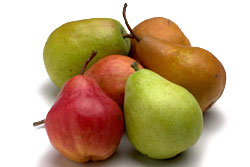 The foods included in a strict FAILSAFE diet are mainly fresh and unprocessed. Once you have been on a FAILSAFE diet long enough for symptoms of food intolerance to go away (usually about 2 weeks), you may reintroduce foods one by one to see if they induce symptoms. Foods which do not cause intolerance may be reintroduced to the diet.
The basic elimination diet which must be adhered to until symptoms have reduced includes:
- Staple foods: Semolina, wholemeal and white flour, rice, rice noodles and rice bubbles
- Meat: Beef, chicken and lamb
- Fruit: Pears with the peel removed
- Vegetables: Carrots, lettuce and parsley
- Fats: Olive, sunflower and safflower oils
- Flavour enhancers: Salt and pepper, malt vinegar
Eating plan for the FAILSAFE diet
Breakfast
- Semolina bread with pear jam
Lunch
- Grilled beef
- Lettuce and parsley salad (dressing of malt vinegar and olive oil)
Dinner
- Fried battered chicken (using flour)
- Rice
- Boiled carrots
- Lettuce and parsley salad (dressing of malt vinegar and olive oil)
Snacks
- Peeled pear
- Handful of sunflower seeds
The FAILSAFE diet for ADHD
The FAILSAFE diet was originally developed for individuals who developed allergic reactions (e.g. hives) as a result of food intolerance. However, while testing and modifying the diet, scientists began treating patients for a number of conditions not traditionally associated with food intolerance. One such condition was hyperactivity in children. The scientists hypothesised that certain foods increased behavioural problems, and tested their theory through a randomised controlled trial involving 136 hyperactive children.
The children began following the FAILSAFE diet. Those who responded positively (e.g. those whose behaviour improved), were randomly selected to receive food challenges (i.e. tablets containing one of the eliminated compounds) or a placebo. Their behaviour was then monitored and behavioural changes reported by their parents. All but four children who received the intervention were reported to display exacerbated symptoms of ADHD following the food challenges. In children taking placebo, only five were reported to display adverse behaviour following administration of the placebo.
Evidence for the FAILSAFE diet
 Available evidence demonstrates that pharmacological treatment is the most effective method of controlling ADHD. However, the effectiveness of medications may be improved when used together with other nonmedical treatment. Popular nonmedical treatments for ADHD include:
- Elimination diets;
- Parent and patient education and counselling; and
- Behavioural activities to enhance concentration and attention.
When a health professional is determining the most appropriate treatment strategy for a child, they are likely to consider the severity of the symptoms, the patient’s and parents’ preferences, and their capacity to adhere to the treatment strategy. A key consideration when considering an elimination diet as part of a treatment strategy is therefore the capacity of the child to adhere to the strict nutritional requirements of the diet, and the parents’ capacity to support the diet (e.g. financially and through the preparation of special foods).
Patients and parents should be aware that available scientific evidence suggests that diet modification can improve the behavioural symptoms of ADHD. A trial in children without ADHD challenged them with drinks containing artificial food colours and additives or a placebo, and reported significant increases in hyperactive behaviour amongst the children who received the intervention, compared to the children who received the placebo. A trial of 27 children with ADHD randomly assigned them to an elimination diet or no intervention, and reported significant behavioural improvements amongst the elimination diet group.
These and a number of other studies demonstrate the association between diet and behaviour. They demonstrate that strict adherence to an elimination diet like FAILSAFE can improve hyperactive behaviour in children. However, an elimination diet alone cannot eliminate ADHD symptoms. Most evidence supporting the use of an elimination diet is anecdotal or arising from clinical observation. The only trial in which dietary and pharmacological treatments have been compared was small, involving only 20 children. It compared methylphenidate hydrochloride and food supplement treatment, but did not randomly allocate participants. No trials have compared the FAILSAFE diet (or other elimination diets) with pharmacological interventions.
Further research is therefore necessary to compare the effectiveness of a FAILSAFE or similar elimination diet to pharmacological interventions in reducing hyperactivity in children with ADHD. In the absence of such evidence, pharmacological interventions remain the recommended first line treatment for the condition.
Benefits and limitations of FAILSAFE for children with ADHD
The main benefit of the FAILSAFE diet for children with ADHD is that the diet can reduce symptoms of hyperactivity.
However, there are a number of limitations associated with the diet. The nutritional requirements of the diet are very stringent, and unless children comply fully by eliminating all banned foods from their diets, behavioural benefits will not be seen.
As children with ADHD tend to be impulsive, complying with a strict diet may be difficult. Children may share food with friends at school while unsupervised, become upset and behave badly when denied food by their parents, or simply eat eliminated foods without thinking about it. Practically, this makes strict adherence to the diet difficult.
Even if full compliance is maintained and hyperactive behaviour reduced, there is no evidence that an elimination diet alone can improve behaviour as much as pharmacological treatments can. The available scientific evidence suggests that an elimination diet is most effective when used in conjunction with, rather than instead of, pharmacological treatment.
More information
 |
For more information on childhood ADHD and its symptoms and treatments, as well as some useful tools and animations, see Childhood ADHD. |
 |
For more information on ADHD in adults and its treatments, as well as some useful tools and animations, see Adult ADHD. |
 |
For more information on nutrition, including information on types and composition of food, nutrition and people, conditions related to nutrition, and diets and recipes, as well as some useful videos and tools, see Nutrition. |
References
- Gibson AR, Clancy RL. An Australian exclusion diet. MJA. 1978, 1(5): 290-2.
- Swain AR. The role of natural salicylates in food intolerance [Doctoral thesis]. University of Sydney, February 1988. Available from URL: http://www.cs.nsw.gov.au/rpa/allergy/research/students/1988/anne.cfm
- Ros AM, Juhlin L, Michaëlsson G. A follow-up study of patients with recurrent urticaria and hypersensitivity to aspirin, benzoates and azo dyes. Br J Dermatol. 1976; 95(1): 19-24.
- Swain AR, Dutton SP, Truswell AS. Salicylates in foods. J Am Diet Assoc. 1985; 85(8): 950-60.
- Dengate S. The failsafe booklet [online]. Food Intolerance Network. 11 September 2007 [cited 17 December 2008]. Available from [URL Link]
- Swain AR, Soutter V, Loblay R, Truswell AS. Salicylates, oligoantigenic diets, and behaviour. Lancet. 1985; 2: 41-2.
- The Royal Australasian College of Physicians, Paediatrics & Child Health Division. Medication management for attention deficit hyperactivity disorder: A brief guide for parents and non health professionals [online]. 10 July 2006 [cited 17 December 2008]. Available from URL: http://www.racp.edu.au/index.cfm?objectid=A4268489-2A57-5487-DEF14F15791C4F22
- NSW Health, Pharmaceutical Branch. Criteria for diagnosis and management of attention deficit hyperactivity disorder in children and adolescents [online]. NSW Government Department of Health. 1 February 2008 [cited 17 December 2008]. Available from URL: http://www.health.nsw.gov.au/resources/publichealth/pharmaceutical/adhd_criteria_child.asp
- McCann D, Barrett A, Cooper A, Crumpler D, Dalen L, Grimshaw K, et al. Food additives and hyperactive behaviour in 3-year-old and 8/9-year-old children in the community: A randomised double-blinded, placebo-controlled trial. Lancet. 2007; 370: 1560-67.
- Pelsser LMJ, Frankena K, Toorman J, Savelkoul HF, Pereira RR, Buitelaar JK. A randomised controlled trial into the effects of food on ADHD. Eur Child Adolesc Psychiatry. 2008; [Epub ahead of print].
- Jacobson MF, Schardt D. Diet, ADHD and behavior: A quarter century review [online]. Center for Science in the Public Interest. September 1999 [cited 17 December 2008]. Available from: [URL Link]
- Harding KL, Judah RD, Gant C. Outcome-based comparison of Ritalin versus food-supplement treated children with AD/HD. Altern Med Rev. 2003; 8(3): 319-30.
- Curtis LT, Patel K. Nutritional and environmental approaches to preventing and treating autism and ADHD (ADHD): A review. J Altern Complement Med. 2008; 14(1): 79-85.
All content and media on the HealthEngine Blog is created and published online for informational purposes only. It is not intended to be a substitute for professional medical advice and should not be relied on as health or personal advice. Always seek the guidance of your doctor or other qualified health professional with any questions you may have regarding your health or a medical condition. Never disregard the advice of a medical professional, or delay in seeking it because of something you have read on this Website. If you think you may have a medical emergency, call your doctor, go to the nearest hospital emergency department, or call the emergency services immediately.
Related Articles


Need a health appointment?
Find and book a doctor, dentist, physio and more on Healthengine
Find a practitioner