


 Login
LoginStomach Cancer


Cancer and the body
Cancer overview
 | Cancer, a condition of abnormal cell growth, is the second most common cause of death in developed countries. Normal cell growth is a carefully regulated process. Cancer cells replicate in an uncontrolled manner, and can move from one part of the body to another. |
For more information, see Cancer: Overview.
Types of stomach cancer
GIST (gastrointestinal stromal tumour)
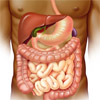 | Gastrointestinal stromal tumours (GISTs) are cancers that arise from cells within the gastrointestinal tract. The most common location for a GIST to develop is the stomach. GISTs can be benign or malignant. |
For more information, see GIST (Gastrointestinal Stromal Tumour).
Adenocarcinoma of the stomach
 | Over 90% of the cancers that occur in the stomach are gastric adenocarcinomas. This name implies that the cancer is located in the stomach (gastric), affects cells that would normally make up glands (adeno-) and has malignant potential (-carcinoma). |
For more information, see Adenocarcinoma of the Stomach.
Lymphoma of the stomach
 | Lymphoma is a cancer of the lymphatic cells/lymphoid tissue that forms part of the immune system. The cells/tissues affected may be located within lymph nodes or in lymphoid tissue located in other sites of the body. The stomach is the most commonly affected site for lymphomas affecting the gastrointestinal tract. |
For more information, see Lymphoma of the Stomach.
Investigations
Genetic typing of cancers
 | Individuals that inherit a genetic mutation from their parents are at a greater risk of certain types of cancers. Familial cancer syndromes are the group of cancers where patients inherit genes that do not function properly, increasing the risk of developing cancer. |
For more information, see Genetic Typing of Cancers.
Treatments
Biological therapy (Biotherapy)
 | Biological therapy, or biotherapy, immunotherapy or biological response modifiers, are gaining increasing prominence as anti-cancer agents. They may be used either alone or in combination with traditional anti-cancer treatments such as chemotherapy. |
For more information, see Biological therapy (Biotherapy).
Dates
Posted On: 6 April, 2010
Modified On: 27 May, 2013
Tags


Created by: