Heart Health


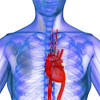
The heart


Video: Heart health

Osteoporosis videoHow do you keep your heart healthy? Dr Joe Kosterich talks about key points in heart health, including what foods to eat, diabetes, your BMI, exercise, smoking and stress. 

Watch the video Heart Health.


The cardiovascular system 

Cardiovascular systemThe cardiovascular system can be thought of as the transport system of the body. This system has three main components: the heart, the blood vessel and the blood itself. The heart is the system's pump and the blood vessels are like the delivery routes. Blood is a fluid that transports the oxygen and nutrients needed by the body.

For more information, see Cardiovascular System. 


Animation: How the heart works

How the heart works animationThe heart pumps approximately 10 pints of blood every minute, and each heartbeat circulates blood to both the lungs and the body. This is possible because of the heart's complex internal structure. 

Watch an animation about how the heart works.


Cholesterol

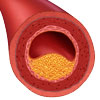
CholesterolCholesterol is a substance naturally found in the walls of cells. It is used by the body to produce certain hormones, vitamin D, and bile acids that help to digest fat. If the amounts of cholesterol in the blood are excessive, cholesterol can build up in arteries, which can lead to coronary heart disease and many other serious conditions.

For more information on cholesterol, including the health effects of high cholesterol and ways to lower cholesterol levels, as well as some useful tools, see Cholesterol.   


Heart disease


Heart

General Cardiovascular Disease 10-Year Risk Calculator

This risk assessment tool is based on data from the Framingham Heart Study to estimate 10-year risk for general cardiovascular disease outcomes (coronary death, myocardial infarction, coronary insufficiency, angina, ischaemic stroke, haemorrhagic stroke, transient ischaemic attack, peripheral artery disease, heart failure). This tool is designed to estimate risk in adults aged 30-74 years of age without CVD at baseline examination. Use the calculator below to estimate 10-year risk.

Predictors

Age years
  Male Female
Gender
  Yes No
Have you been diagnosed with Type II diabetes?
Are you a smoker?*
Are you prescribed medication to lower your blood pressure?
 
If you do not know the following blood pressure and cholesterol parameters ask your General Practitioner on your next visit.
Systolic blood pressure** mmHg
 
Total cholesterol*** mmol/L      OR mg/dl
 
HDL cholesterol**** mmol/L      OR mg/dl
 

Results

Significant (> 20%)
Elevated (10–20%)
Mild risk (< 10%)
You have a significant risk of future cardiovascular disease requiring aggressive risk factor modification. You should see a health professional to ensure appropriate management.
  • If diabetic, your sugar levels should be well controlled.
  • Continue to avoid tobacco use or if you are a smoker, consider stopping this is something your General Practitioner can help you with.
  • Blood pressure should be monitored closely. If elevated you should consider either lifestyle modification or appropriate medication. Your general Practitioner can advise you on this.
  • Cholesterol levels should be assessed at least annually. Depending on your level, you might be advised to commence lifestyle changes or medication.
Significant (> 20%)
Elevated (10–20%)
Mild risk (< 10%)
You have an elevated risk of future cardiovascular disease requiring risk factor modification. You should see a health professional to ensure appropriate management.
  • If diabetic, you should aim for your sugar levels to be well controlled.
  • Continue to avoid tobacco use or if a smoker, consider stopping this is something your general practitioner can help you with.
  • Blood pressure should be monitored closely. If elevated you should consider either lifestyle modification or appropriate medication. Your general Practitioner can advise you on this.
  • Cholesterol levels should be assessed at least annually. Depending on your level you might be advised to commence lifestyle changes or medication.
Significant (> 20%)
Elevated (10–20%)
Mild risk (< 10%)
You have a mild risk of future cardiovascular disease, consider risk factor modification. You may like to see a health professional to ensure appropriate management.
  • If diabetic, you should aim for your sugar levels to be well controlled.
  • Continue to avoid tobacco use or if a smoker, consider stopping this is something your general practitioner can help you with.
  • Blood pressure should be monitored closely. If elevated you should consider either lifestyle modification or appropriate medication. Your general Practitioner can advise you on this.
  • Cholesterol levels should be assessed at least annually. Depending on your level you might be advised to commence lifestyle changes or medication.
*For these purposes "smoker" means any cigarette smoking in the past month.
**Use current blood pressure, regardless of whether the person is on antihypertensive therapy.
***Total cholesterol values should be the average of at least two measurements obtained from lipoprotein analysis.
****HDL cholesterol values should be the average of at least two measurements obtained from lipoprotein analysis.
References:
  1. D'Agostino RB, Vasan RS, Pencina MJ, Wolf PA, Cobain M, Massaro JM, Kannel WB. General cardiovascular risk profile for use in primary care: the Framingham Heart Study. Circulation 2008; 117: 743-753.
  2. National Cholesterol Education Program (NCEP) Expert Panel on Detection, Evaluation, and Treatment of High Blood Cholesterol in Adults (Adult Treatment Panel III). Third Report of the National Cholesterol Education Program (NCEP) Expert Panel on Detection, Evaluation, and Treatment of High Blood Cholesterol in Adults (Adult Treatment Panel III) final report. Circulation 2002; 106: 31433421.
  3. Stancoven A, McGuire DK. Preventing macrovascular complications in Type 2 Diabetes Mellitus: glucose control and beyond. American Journal of Cardiology 2007; 99: 5H-11H.

This information will be collected for educational purposes, however it will remain anonymous.


Video: Cardiovascular disease prevention

CVD prevention videoClinical Associate Professor David Sullivan explains the significance of family history and cholesterol in cardiovascular disease, the importance of promoting awareness about the inherited risk of CVD, and the concept of familial cascade screening. 

Watch the video Cardiovascular Disease Prevention.


Metabolic syndrome 

Metabolic syndromeMetabolic syndrome is diagnosed when a number of metabolic abnormalities (including insulin resistance and obesity) occur at the same time in an individual. Individuals who have the syndrome are more likely to develop cardiovascular disease and type 2 diabetes mellitus than those who do not.

For more information, see Metabolic Syndrome.  


Video: Diet and metabolic syndrome

Diet and metabolic syndrome video1 in 3 Australians over the age of 25 have metabolic syndrome. Clinical dietitian Dr Catherine Itsiopoulos discusses ways to identify if you have metabolic syndrome, ways to prevent it, and tips on healthy eating. 

Watch the video Diet and Metabolic Syndrome.


Eating for heart health 


Nutrition for lowering cholesterol levels

Cholesterol and nutritionDietary changes are often the first things attempted to try to lower cholesterol levels. Losing weight, exercising and cutting down on "bad" fats are the cornerstones of a cholesterol-lowering lifestyle. The excess calories that you consume, regardless of where they come from (carbohydrates, fats or protein), will be transformed into triglycerides for storage as body fat.

For more information, see Nutrition for Lowering Cholesterol Levels.  


Mediterranean diet 

Mediterranean dietThe Mediterranean diet is a diet based on plant foods. It is high in N-3 fatty acids, antioxidants and phytochemicals, and low in cholesterol, salt and sugar. The Mediterranean diet has received a lot of attention in recent years because scientists have shown that following it is associated with a number of health benefits.

For more information, see Mediterranean Diet.   


More information


Nutrition

Nutrition
For more information on nutrition, including information on types and composition of food, nutrition and people, conditions related to nutrition, and diets and recipes, as well as some useful videos and tools, see Nutrition.


Fitness

Fitness
For more information on fitness and exercise, including stretches, types of exercise, exercise recovery and exercise with health conditions, as well as some useful videos, see Fitness and Exercise.


Connect

Sign up for free newsletter Sign up for free newsletters
News RSS feeds Subscribe to RSS feeds
Discuss on Forum Discuss on Forum
share this page with others

Popular Health Topics Dates:


calendar icon Created: 21/8/2009 calendar icon Modified: 14/2/2011
Current Sponsors

Virtual Medical Centre

Australia’s leading source for trustworthy medical information written by health professionals.

Please be aware that we do not give advice on your individual medical condition,
if you want advice please see your treating physician.

Virtual Medical Centre © 2002 - 2012 | Privacy Policy Last updated 21 May 2012

This website is certified by Health On the Net Foundation. Click to verify. This site complies with the HONcode standard for trustworthy health information:
verify here.
Our site has been approved by the HealthInsite Editorial Board to be a HealthInsite information partner site PANDORA is a digital archive dedicated to the preservation of and long term access to Australian online electronic publications of national significance Parenthub.com.au for parenting information
For banner advertising
Sensis Digital Media
Website and videos by

Titan Web
Titan Web Clients
Web Design Perth
^ Back to Top
Proudly brought to you by
Sponsors Logos