


 Login
LoginContraception


- Choosing the right contraceptive
- Dr Joe video on contraception
- Protecting against sexually transmitted infections (STIs)
- Male urogenital system
- Female urogenital system
- Male puberty
- Female puberty
- Menstruation
- Hormonal contraception
- Natural contraception
- Non-hormonal contraception
- Rape management
- Pregnancy
- Termination of pregnancy
- Contraception after childbirth and during breastfeeding
Choosing the right contraceptive
 | Contraceptives, also commonly referred to as family planning or birth control methods, are a range of devices, procedures and medications which assist women to prevent pregnancy. Choosing the right contraceptive involves assessing the benefits and limitations of hormonal, barrier, natural or other methods. |
For more information, see Contraception – Birth Control
Dr Joe video on contraception
 | Contraception is a topic that can fire people’s passions. Dr Joe talks about the ways in which we can prevent pregnancy, including measures for both males and females and barrier and hormonal contraceptive methods |
Watch the video Contraception.
Protecting against sexually transmitted infections (STIs)
 | Sexually transmitted infections (STIs) are a group of bacteria and viruses which can be, and most commonly are, transmitted through sexual contact. Preventing STIs is a vastly more effective strategy than providing treatment, both in terms of financial and health costs. Approaches to STI prevention include biomedical, behavioural and structural approaches. |
For more information, see Protecting Against Sexually Transmitted Infections
Male urogenital system
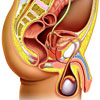 | The male urogenital system consists of all the organs involved in reproduction and the formation and release of urine. It includes the testes, epididymis, vas deferens, ejaculatory ducts, urethra, penis, prostate and accessory glands. |
For more information, see Male Urogenital System
Female urogenital system
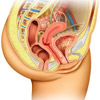 | The female urogenital system consists of all the organs involved in reproduction and the formation and release of urine. It includes the kidneys, ureters, bladder, urethra, and the organs of reproduction – uterus, ovaries, fallopian tubes and vagina. |
For more information, see Female Urogenital System
Male puberty
 | When boys reach the age of about 10-12, a surge of reproductive hormones are secreted by the brain, activating the reproductive system to prepare it for adult function. This surge is generally referred to as the onset of puberty and leads to the beginning of adult sexual life. Puberty is considered to be complete when viable sperm is present in the ejaculate for the first time. |
For more information, see Male Puberty
Female puberty
 | When girls reach the age of about 9-10, a surge of reproductive hormones are secreted by the brain, activating the reproductive system to prepare it for adult function. This surge is generally referred to as the onset of puberty and leads to the beginning of adult sexual life. Puberty is considered to be complete when girls experience their first menstrual period. |
For more information, see Female Puberty
Menstruation
 | Menstruation involves ovulation and shedding of the endometrium in a cyclical fashion in an attempt to release an unfertilised egg ready for fertilisation when in the presence of sperm. The cycle has an average duration of 28 days, but the normal range is between 21 to 35 days. |
For more information, see Menstruation.
Menstruation occurs in cycles. The ovaries prepare an egg (oocyte) for release and the womb (uterus) prepares a lining to nourish the egg if it is fertilised. When the egg is not fertilised, the lining of the womb is shed and a woman gets her period (menstrual bleeding). Menstruation typically occurs in 28 day cycles so most women get their period every 28 days. However, some women have longer cycles and may only get their period every 40 days, while other have shorter menstrual cycles and may get their periods as often as every 21 days. The menstruation calculator determines when your next period is due based on a 28 day menstrual cycle. All you need to do is enter the date when your last menstrual bleeding began, and the calculator will tell you when to expect your next period. | |
| 1. Select your menstrual cycle length: days | |
2. Select your last Menstrual Date: | Next Menstrual Date Due: |
| The information presented here is for general purposes only and should not be used to make diagnosis or treatment decisions. For specific information about your health you should see a health professional. Reference
| |
Hormonal contraception
Emergency contraception
 | Emergency or post-coital contraception refers to any method of preventing pregnancy following either unprotected sexual intercourse or contraceptive failure. |
For more information, see Emergency Contraception.
Lactational amenorrhoea
 | The lactational amenorrhoea method of contraception is based on the natural phase of infertility that occurs with breastfeeding shortly after birth, due to low oestrogen levels that prevent ovulation from occurring. |
For more information, see Lactational Amenorrhoea.
Natural contraception
 | Natural contraceptive methods are methods of preventing pregnancy which rely on a woman monitoring her fertility throughout the menstrual cycle and avoiding sex on days of the cycle in which she is fertile. They include cervical mucus monitoring, calendar based methods, basal body temperature monitoring and symptothermal methods. |
For more information, see Natural Contraception.
Non-hormonal contraception
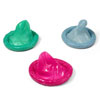 | Non-hormonal contraceptives include barrier methods and other methods such as intrauterine devices, female and male sterilisation procedures, spermicides and the withdrawal method of contraception. |
For more information, see Non-hormonal Contraception.
Rape management
 | Rape is defined as any sexual act performed by a person(s) on another without consent. It may result from the use of force, the threat of force, or from the victim’s inability to give consent. It encompasses all unwanted sexual acts ranging from fondling to penetration. |
For more information, see Rape Management.
Pregnancy
 | Contraceptives must be used consistently and correctly to effectively protect against pregnancy. However, there are limitations regarding the effectiveness of various contraceptive methods, and no method is 100% effective. |
For more information, see Pregnancy.
Termination of pregnancy
 | If a woman chooses not to pursue a pregnancy, she may terminate it by having an abortion. An abortion is a surgical procedure to remove the contents of the uterus. Late term abortions are usually not possible unless there is a risk to the woman’s health, or the foetus has a serious medical condition. |
For more information, see Abortion.
Contraception after childbirth and during breastfeeding
 | There are many considerations a woman must make about contraceptive use after childbirth. In particular, the woman must decide which contraceptive method to use and when to start using contraception. |
For more information, see Contraception after childbirth and during breastfeeding.
Dates


Created by: