


 Login
LoginBowel cancer (colorectal cancer)


- Cancer and the gastrointestinal system
- Risk factors for bowel cancer
- Types of bowel cancer
- Tests for bowel cancer
- Treatments
- Supportive care
Cancer and the gastrointestinal system
Cancer overview
 | Cancer, a condition of abnormal cell growth, is the second most common cause of death in developed countries. Normal cell growth is a carefully regulated process. Cancer cells replicate in an uncontrolled manner, and can move from one part of the body to another. |
For more information on cancer, see Cancer: Overview.
Anatomy of the gastrointestinal system
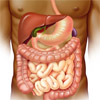 | The gastrointestinal tract (GIT) consists of a hollow muscular tube starting from the oral cavity, where food enters the mouth, continuing through the pharynx, oesophagus, stomach and intestines to the rectum and anus, where food is expelled. |
For more information, see Gastrointestinal System.
Risk factors for bowel cancer
Colonic polyps and hereditary polyposis syndromes
 | Colonic polyps is a disease of the gastrointestinal tract. A ‘polyp’ is any elevation above the surface of the lining of the gut (the mucosa). The importance of polyps, is that some of them (in particular adenomas) have malignant potential. |
For more information, see Colonic Polyps and Hereditary Polyposis Syndromes.
Types of bowel cancer
Bowel cancer (adenocarcinoma of the caecum)
 | Bowel cancer may be of the adenocarcinoma type and usually arises from the epithelium lining the inside of the large bowel which lines the large intestine. Geographically, the bowel cancer tumour is found worldwide, but bowel cancer is most common in areas which have low fibre diets (the refined Western diet). |
For more information, see Bowel Cancer (Adenocarcinoma of the Caecum).
Small bowel cancer (adenocarcinoma of the small intestine)
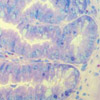 | Small bowel cancers include adenocarcinomas, carcinoid tumours, lymphomas, and leimyosarcomas. The small bowel is composed of the duedenun, jejenum, and ileum. Small bowel cancer is not common overall – accounting for 3 to 6% of gastrointestinal tumours, even though it represents 75% of the length of gastrointestinal tract. |
For more information, see Small Bowel Cancer (Adenocarcinoma of the Small Intestine) .
Rectal cancer (adenocarcinoma of the rectum)
 | Rectal cancer may be of the adenocarcinoma type and usually arise from the layer of cells which lines the large intestine. Rectal cancer is common but occurs very rarely in young adults. Rectal cancer becomes more common as age increases. People in their 50s, 60s and 70s are most at risk with with sex incidence being slightly more common in females. |
For more information, see Rectal Cancer (Adenocarcinoma of the Rectum).
Tests for bowel cancer
Screening for bowel cancer (colorectal cancer)
 | ‘Screening‘ refers to performing tests on people who have no symptoms, with the intention of diagnosing conditions which may otherwise have gone unnoticed. In the case of bowel cancer, screening tests are designed to detect cancer before it becomes large enough to produce symptoms. This allows treatment to start earlier. |
For more information, see Bowel Cancer Screening.
Professor Finlay Macrae explains bowel cancer screening
 | Bowel cancer is the most common internal cancer in Australia, and the second-most common cause of cancer death. Professor Finlay Macrae talks about the National Bowel Cancer Screening Program. |
Watch the video Bowel Cancer Screening.
Colonoscopy
 | Colonoscopy is a common procedure that allows examination of the inner surface of the colon (large intestine) by means of a colonoscope. In general, the whole colon can be examined, up to and including the caecum and often even to the ileum (at the end of the small intestine). |
For more information, see Colonoscopy.
‘My experience’: Dan’s intimate colonoscopy experience
 | Dan may have become the ‘butt’ of a few jokes for a short time before his colonoscopy but screening for bowel cancer is no laughing matter. Though Dan was apprehensive at first, he says that now that he has done it, he knows this procedure is absolutely nothing to fear. |
For more information, see ‘My Experience’: Dan’s Intimate Colonoscopy Experience.
Biomarkers of colorectal cancer
 | Tumour biomarkers are chemicals that are made by tumour cells or other cells of our body, in response to cancer or other benign conditions. Different types of cancers or tumours may be associated with different tumour biomarkers. |
For more information, see Biomarkers of Colorectal Cancer.
Genetic typing of cancers
 | Individuals that inherit a genetic mutation from their parents are at a greater risk of certain types of cancers. Familial cancer syndromes are the group of cancers where patients inherit genes that do not function properly, increasing the risk of developing cancer. |
For more information, see Genetic Typing of Cancers.
Treatments
Biological therapy (Biotherapy)
 | Biological therapy, or biotherapy, immunotherapy or biological response modifiers, are gaining increasing prominence as anti-cancer agents. They may be used either alone or in combination with traditional anti-cancer treatments such as chemotherapy. |
For more information, see Biological therapy (Biotherapy).
Supportive Care
Bowel Cancer Australia
 | Bowel Cancer Australia works to reduce the impact of bowel cancer in our society through awareness, education, support and research. We aim to help save lives from this common cancer, Australia’s second biggest cancer killer. |
For more information, see Bowel Cancer Australia.
Cancer Council Australia
 | As Australia’s peak national non-government cancer control organisation, Cancer Council Australia advises the Australian Government and other bodies on practices and policies to help prevent, detect and treat cancer. We also advocate for the rights of cancer patients for best treatment and supportive care. |
For more information, see Cancer Council Australia.
Cancer Voices Australia
 | Cancer Voices Australia is the national consumer organisation representing Australians affected by cancer. It aims to ensure the voices of people affected by cancer are heard at a national level. |
For more information, see Cancer Voices Australia.
Dates
Tags


Created by: