


 Login
LoginBlood Clotting and Monitoring

What is blood and why is it so important?
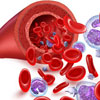 | Blood has three main functions: transport, protection and regulation. Approximately 8% of an adult’s body weight is made up of blood. Females have around 4–5 litres, while males have around 5–6 litres. Its mean temperature is 38 degrees Celsius and it has a pH of 7.35–7.45, making it slightly basic. |
For more information, see Blood Function and Composition.
Video: Blood clotting and blood thinning agents
 | The ability of the blood to form clots is very useful; however, it becomes a problem if the blood forms a clot where we don’t want it to. Dr Joe Kosterich talks about blood clots and blood thinning agents, including different types of blood clotting disorders, why people are given blood thinning agents, what they are, how they work, how they are used, and blood tests. |
For more information, watch the video Blood Clotting and Blood Thinning Agents.
Anticoagulants
 | Anticoagulants are substances that work against the process of blood clotting. Normally, clotting only occurs when there is blood loss from a damaged blood vessel. However, there are several conditions that can cause blood clots to form in the absence of active bleeding. Currently there are two anticoagulants in use: warfarin and heparin. |
For more information, see Anticoagulants.
Testing before surgery
 | Adequate blood clotting is very important if you are about to have a surgical procedure. Modern surgical techniques have resulted in an overall decrease in significant bleeding, but the increasing complexity of surgical and other invasive procedures has also presented challenges for the prevention of bleeding. |
For more information, see Blood Clotting: Assessment Before Surgery.
INR monitoring
 | The international normalised ratio (INR) is a laboratory measurement used to determine the effects of oral anticoagulants (i.e. warfarin) on the clotting system. The INR of people using warfarin is regularly monitored in order to balance the risk of excessive bleeding (when the INR is too high) against the risk of clotting or thrombosis (when the INR is too low). |
For more information, see Blood Clotting: International Normalised Ratio (INR).
More information
 | For more information on blood, blood types, blood tests, and blood donation and transfusion, see Blood. |
Dates
Posted On: 4 October, 2010
Modified On: 30 March, 2017
Tags


Created by: