


 Login
LoginAllergic Conjunctivitis


Allergy and the body
The immune system
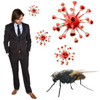 | The immune system has the very important role of protecting us from infection. Most of the time, the immune system functions well, with an immune response directed against a potentially harmful organism (such as a bacterium or virus). But in some people, the immune system attacks a harmless substance, which can lead to damage to human tissues. |
For more information, see Allergy and the Immune System.
The eye
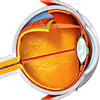 | The eye is the organ that enables the phenomenon of vision. The eyeball itself is a sphere spanning approximately 24 mm in diameter. The conjunctiva refers to the lining of the eye. It helps lubricate the eye by secreting mucus and tears, and serves as a protective barrier again microbes. |
For more information, see The Eye and Vision.
Allergic conjunctivitis
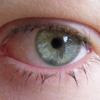 | Conjunctivitis is a very common reason for an individual to experience an uncomfortable, red eye. There are a number of distinct origins for conjunctivitis, including bacteria, viruses and, importantly, allergies. Allergic conjunctivitis, as opposed to other forms of conjunctivitis, refers to the process by which the conjunctiva becomes inflamed due to allergic reactions, also known as hypersensitivity reactions. |
For more information, see Allergic Conjunctivitis.
Simple allergic conjunctivitis
 | Simple allergic conjunctivitis encompasses two main forms: a seasonal and a perennial form. Some people are susceptible to seasonal allergic conjunctivitis in spring, a time when there are many airborne grass pollens. Perennial allergic conjunctivitis is connected to common environmental allergens such as dust mites, animal dander and feathers. |
For more information, see Simple Allergic Conjunctivitis.
Giant papillary conjunctivitis
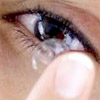 | Giant papillary conjunctivitis (GPC) is a type of allergic conjunctivitis in which, a foreign body causes prolonged mechanical irritation, resulting in a reaction in the eye. Contact lenses are the most common foreign bodies causing the irritation. |
For more information, see Giant Papillary Conjunctivitis.
Atopic keratoconjunctivitis
 | Atopic keratoconjunctivitis (AKC) refers to a particular type of allergic conjunctivitis. Commonly, both eyes are affected in AKC. About 95% of people with AKC report having had atopic dermatitis (eczema), and about 87% have experienced asthma earlier in life. |
For more information, see Atopic Keratoconjunctivitis.
Vernal keratoconjunctivitis
 | Vernal keratoconjunctivitis (VKC) usually affects both eyes, follows a more long-term course, and is strongly linked to a personal or family history of other allergic diseases. It is most often experienced in childhood and adolescence, and is most common between 4 and 20 years of age. |
For more information, see Vernal Keratoconjunctivitis.
More information
Spring allergies
 | For more information on spring allergies, including why people get allergies, how allergies affect you and how to prevent them, as well as some useful animations and videos, see Spring Allergies. |
Dates
Posted On: 23 July, 2010
Modified On: 16 September, 2014
Tags


Created by: