- Introduction to full physical examinations
- What happens during a physical examination?
- Complications
- Cancer screening
Introduction to full physical examinations
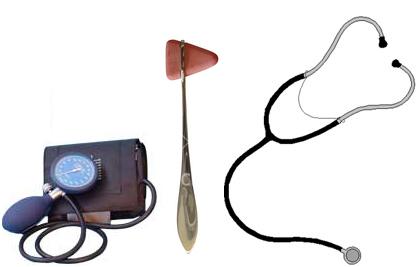
A full physical examination is a general examination of the body performed by the doctor or general practitioner (GP). The examination will cover most of the basic systems of the body, including the heart system, lung system, gut system and nerve system examination. Additional examination can be added depending on the clinical scenarios. The purposes of a full physical examination is to confirm any present issues after the clinical history; and to find possible pathologies that are present but yet to be known about.
Clinical history and physical examination are the essential part of medicine since Western medicine was established centuries ago. However with the advance of technological investigations, many diseases are diagnosed with blood tests and imaging studies. Many diseases are diagnosed earlier using modern technology where previously physical examination could find nothing, for example prostate cancer, colon cancer, etc.
Yet quoting the Medical Journal of Australia Editorials, on “Physical examination: bewitched, bothered and bewildered”, it states that: “Together with the history, physical examination is the doctor’s best kept secret – powerful, portable, fast, cheap, durable, reproducible and fun … We recommend a thorough check-up. Preferably by a doctor who takes the time to look, listen, even touch.” This shows how important physical examination is in medical practice.
What happens during a physical examination?
Before a physical examination is carried out, the doctor will ask for consent from the patient. If the patient is of a different gender from the doctor, a chaperone may be needed (especially when a male doctor examines a female patient). Usually some parts of the body will need to be exposed, and permission is obtained as well.
The physical examination usually starts with the vital signs, and that include the heart rate, blood pressure, respiratory rate and temperature.
Generally, there are 4 parts of physical examination:
- Inspection: looking for signs
- Palpation: feeling for signs
- Percussion: tapping for signs, used when doing a lung and/or gut examination.
- Auscultation: listening using the stethoscope, or in olden times, purely listening with direct ear.
Not all of these will be present in the systems examination but most will do.
Depending on the training of the doctor, the sequence of the systems covered may be different. However all physical examinations strive to determine more about the present disease the patient has, or possible diseases that are yet to be diagnosed.
During the physical examination, the doctor strives to keep the patient as comfortable as possible. However, sometimes tender spots need to be touched and examined for accurate or reliable diagnosis.
After the physical examination, the patient will be asked to dress, and then the doctor will tell the patient the clinical findings. Coupled up with clinical history, the doctor will either proceed to investigations, or manage the disease based on these 2 alone.
Complications
Aside from some discomfort for some patients, physical examination usually have no severe risks.
Cancer screening
Because physical examination is low cost (only the cost of expertise is needed), non-invasive (ie. not entering the body cavity in any way) and potentially revealing, they are recommended as screening tests for certain diseases such as breast cancer, skin cancer and even prostate cancer. These screening tests need to be done in conjunction with the patient’s respective clinical histories, hence they need to be discussed with the doctor.
References
- MJA Editorials: Physical examination: bewitched, bothered and bewildered [online]. [Cited 2005 September 25th]. Available from: URL: http://www.mja.com.au/public/issues/182_08_180405/rei10915_fm.html
- Reilly BM. Physical examination in the care of medical inpatients. Lancet 2003; 362: 1100-1105.
All content and media on the HealthEngine Blog is created and published online for informational purposes only. It is not intended to be a substitute for professional medical advice and should not be relied on as health or personal advice. Always seek the guidance of your doctor or other qualified health professional with any questions you may have regarding your health or a medical condition. Never disregard the advice of a medical professional, or delay in seeking it because of something you have read on this Website. If you think you may have a medical emergency, call your doctor, go to the nearest hospital emergency department, or call the emergency services immediately.
Related Articles

The world of healthcare is rapidly changing, and…
Digestive conditions are prevalent and can significantly impact…
Blood pressure is a crucial factor in overall…
Need a health appointment?
Find and book a doctor, dentist, physio and more on Healthengine
Find a practitioner