- What is Polycystic Ovarian Syndrome (PCOS)?
- Statistics
- Risk Factors
- Progression
- Symptoms
- Clinical Examination
- How is it Diagnosed
- Prognosis
- Treatment
- References
What is Polycystic Ovarian Syndrome (PCOS)?
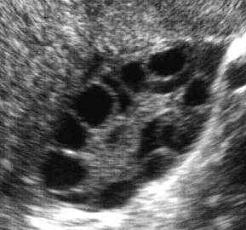 Polycystic ovarian syndrome (PCOS), also known as Stein-Leventhal syndrome, is a common condition characterised by menstrual irregularities and symptoms or laboratory evidence of hyperandrogenism (excess levels of androgen). In many women with PCOS, polycystic ovaries will be detected on ultrasound.
PCOS was first described in 1935 as a collection of commonly occurring signs and symptoms. Since then, the criteria for diagnosing PCOS have changed several times. Most recently, the Rotterdam Consensus Conference agreed that PCOS may be diagnosed where any two of the following conditions are present:
- Menstrual dysfunction: infrequent menstrual periods where no egg is released;
- Clinical or laboratory evidence of hyperandrogenism (e.g. increased body hair, acne, high levels of testosterone on testing);
- Polycystic ovaries on ultrasound.
Other characteristic features of PCOS include infertility, obesity and insulin resistance. PCOS is associated with an increased risk of developing endometrial or ovarian cancer, diabetes, high blood pressure, and cardiovascular disease. PCOS is a condition that can occur at any age, and is found in childhood, during puberty, in adolescence, adulthood and in the elderly.
Statistics
Polycystic ovarian syndrome is believed to be one of the most common hormonal abnormalities found in women. Depending on the criteria used to define the syndrome, PCOS may affect between 5 and 10% of women of reproductive age.
The presence of polycystic ovaries alone is not enough to achieve a diagnosis of PCOS. This is because multiple ovarian cysts are detected in as many as 20-25% of normal women on ultrasound examination.
Risk Factors
The cause of PCOS is poorly understood. A genetic (inherited) link is likely, but has not yet been identified.
One key factor in the development of PCOS is thought to be insulin resistance. The cells of the body become resistant to insulin, failing to respond normally. The body compensates for this by increasing insulin production, leading to hyperinsulinaemia (excess insulin in the blood). This in turn is thought to lead to the other problems of PCOS: excess androgen production, and abnormal production of the sex hormones responsible for regulating the menstrual cycle.
Progression
PCOS is a condition that can occur at any time during a woman’s life. Depending on when the condition occurs, it can have varying effects. If PCOS occurs in an unborn baby, it can cause a small baby syndrome. If PCOS develops around puberty, it can cause problems with the start of a girl’s period. PCOS during adolescence and adulthood will cause reduced periods, excess sex hormone levels, polycystic ovaries and, in 50%, obesity. In ageing individuals, the features of PCOS are diabetes, high blood pressure and abnormal blood lipid (cholesterol) levels; the combination of these findings is called the metabolic syndrome.
Period Problems:
These problems usually occur around puberty. There can be a delay in the onset of the first period (menarche), or normal menarche followed by a period of irregular bleeding and weight gain. Some women experience excessive menstrual bleeding (menorrhagia). Weight loss has been shown to be effective in allowing a return to normal cycles.
Excessive sex hormone levels:
This is seen in the following symptoms:
- Hirsutism: excess thick pigmented body hair following a male distribution (e.g. on the upper lips, chin, around the nipples and on the abdomen).
- Acne
- Male-pattern balding
It is thought that approximately 50% of women with PCOS have elevated androgen levels. However, this figure depends on the androgen in question and the method of measurement.
Infertility:
Women with PCOS have irregular menstrual cycles. They also may not release an egg (ovulate) with each menstrual cycle. Combined, these factors can lead to a woman with PCOS having difficulty falling pregnant.
Obesity and insulin resistance:
Approximately 50% of women with PCOS suffer from obesity. Obesity can also be a cause of insulin resistance, but in women with PCOS the insulin resistance is not directly due to obesity.
Type 2 diabetes mellitus:
Women with PCOS have an increased risk of developing type 2 diabetes mellitus. This risk is particularly high in women who have a first degree relative with diabetes. There is a genetic link between PCOS and diabetes.
Other possible clinical manifestations of PCOS:
- Blood lipid (cholesterol) abnormalities
- Increased risk of endometrial cancer
- Metabolic syndrome
- Coronary heart disease
- Miscarriage
Symptoms
If your health professional is considering a diagnosis of PCOS, he or she may ask questions about the following:
- Your menstrual history, including when you started menstruating, how regular your periods are, and how heavy they are.
- Symptoms of excess male sex hormone production (e.g. acne, hirsutism or male-pattern hair loss).
- Infertility or recurrent miscarriages.
- Any family history of polycystic ovarian syndrome or type 2 diabetes.
Clinical Examination
A general physical examination is important to check height, weight, blood pressure and pulse. Your medical practitioner may also want to examine you for any signs suggestive of the metabolic syndrome. A gynaecological (pelvic) examination may be necessary to rule out other causes of irregular menstrual bleeding.
How is it Diagnosed
Investigations for polycystic ovarian syndrome may include:
- Glucose testing with a glucose tolerance test: This test looks at how the body handles glucose. It reflects the presence of insulin resistance and is important to exclude diabetes mellitus or impaired glucose tolerance.
- Blood lipid (cholesterol) levels: Some women with PCOS have elevated blood cholesterol levels, which may require treatment.
- Hormone tests: these are an array of blood tests which may include thyroid hormone, prolactin, testosterone and sex hormone binding globulin. They are useful to rule out other causes of symptoms in suspected PCOS.
- Transvaginal ultrasound examination looking at the uterus and ovaries is important to exclude thickening of the lining of the womb, and to look for the classic ‘polycystic’ appearance of the ovaries.
Prognosis
PCOS is a life-long condition which can be managed but not ‘cured’. Without treatment, women with PCOS are at increased risk of a number of complications. Some of these include:
- Type 2 diabetes mellitus
- Hyperlipidaemia
- Cardiovascular disease
- High blood pressure
- Thickening of the uterine wall or endometrial cancer
However, with control of insulin levels, many symptoms of PCOS, as well as the risk of complications, may be significantly reduced.
Treatment
The management of PCOS is complex and life-long. It involves addressing both acute issues (irregular menstruation, infertility and hirsutism), and the chronic issue of insulin resistance.
Irregular menstruation:
If fertility is not required, menstrual dysfunction can be successfully managed by progestogens (e.g. norethisterone, medroxyprogesterone acetate) or the combined oral contraceptive pill. These methods suppress ovulation (egg release) and regulate hormone levels.
Some patients are able to achieve regular ovulation, and therefore regular menstruation, with the assistance of weight loss alone, or with metformin therapy (see below).
Endometrial hyperplasia (thickening of the lining of the womb) should be assessed in all women with PCOS and managed where necessary with hormone therapy.
Hirsutism:
Treatment of this may involve:
- The combined oral contraceptive pill
- Cosmetic measures: hair removal (shaving, waxing, laser removal), bleaching
- Spironolactone
- Other drugs (e.g. antiandrogens such as flutamide and ketoconazole)
Infertility:
In most patients with PCOS, infertility is due to ovulatory failure (failure of the ovary to release an egg each month). Treatment is therefore directed at inducing regular ovulation. Strategies may include:
Lifestyle changes:
A 5% reduction in body mass may be enough to restore ovulation and fertility in some women with PCOS. A 3-6 month trial of lifestyle modification can be reasonably recommended in most women before trialling drug therapy.
Clomiphene citrate:
This is an oestrogen antagonist which helps to induce ovulation. Treatment must be monitored with regular oestrogen levels. There is a risk of multiple pregnancy.
Metformin:
A number of studies have demonstrated successful ovulation induction with metformin, either alone or in combination with clomiphene citrate. It may also be effective in reducing the rate of first trimester miscarriages amongst women with PCOS. However, concerns remain about the safety of metformin during pregnancy, and most women cease metformin upon confirmation of pregnancy.
Ovarian surgery, gonadotrophin treatment and IVF:
Occasionally these have been used in the management of infertility associated with PCOS. However, they carry significant risks and other methods are generally preferred.
Obesity & glucose intolerance:
Lifestyle:
Lifestyle modifications, including diet and exercise, are the first things to consider in the management of obesity in PCOS. Weight loss has been shown not only to improve symptoms such as menstrual dysfunction in the short-term, but also to reduce the risk of long-term complications such as the development of diabetes. Women with PCOS often find weight loss extremely difficult. Some simple strategies to consider include:
- Regular exercise of moderate intensity, at least 30 minutes per day
- Dietary changes: reduce fat, increase fibre, consume foods with a low glycaemic index
- Avoid ‘crash’ or starvation diets
- Moderate alcohol and caffeine consumption
- Stop smoking
- Consider joining a support group to help keep on track
Medication
Glucose intolerance can be managed by oral antidiabetic agents such as metformin. Metformin is particularly appropriate for use in obese patients, as it may assist in weight loss. As mentioned above, metformin can be used to help regulate menstrual cycles and increase fertility. Other oral antidiabetic agents, such as the insulin sensitising thiazolidinediones, have been used with some success in patients with PCOS.
References
- Braunwald, Fauci, Kasper, Hauser, Longo, Jameson. Harrison’s Principles of Internal Medicine. 16th Edition. McGraw-Hill. 2005.
- Impey L. Obstetrics and Gynaecology. 2nd edition. Blackwell. 2004.
- Lobo R. Priorities in polycystic ovary syndrome. MJA. 2001; 174: 554-5.
- Norman JR et al. Polycystic ovary syndrome. MJA. 2004; 180: 132-7.
- Sartor BM et al. Polycystic ovarian syndrome and the metabolic syndrome. American Journal of Medical Sciences. 2004; 330(6): 336-42.
- Sheehan M. Polycystic ovarian syndrome: diagnosis and management. Clinical medicine & research. 2004; 2(1): 13 -27.
- Hard R, Hickey M, Franks S. Definitions, prevalence and symptoms of polycystic ovaries and polycystic ovary syndrome. Best Practice & Research Clinical Obstetrics & Gynaecology. 2004; 18(5): 671-83.
- Norman RJ, Davies MJ, Lord J, et al. The role of lifestyle modification in polycystic ovary syndrome. Trends in Endocrinology and metabolism. 2002; 13: 251-7.
All content and media on the HealthEngine Blog is created and published online for informational purposes only. It is not intended to be a substitute for professional medical advice and should not be relied on as health or personal advice. Always seek the guidance of your doctor or other qualified health professional with any questions you may have regarding your health or a medical condition. Never disregard the advice of a medical professional, or delay in seeking it because of something you have read on this Website. If you think you may have a medical emergency, call your doctor, go to the nearest hospital emergency department, or call the emergency services immediately.
Related Articles

Alzheimer’s disease is a progressive neurological disorder that…

Obstructive sleep apnoea (OSA) is a prevalent and…

The world of healthcare is rapidly changing, and…
Need a health appointment?
Find and book a doctor, dentist, physio and more on Healthengine
Find a practitioner