- What is Hives (Urticaria)
- Statistics on Hives (Urticaria)
- Risk Factors for Hives (Urticaria)
- Progression of Hives (Urticaria)
- Symptoms of Hives (Urticaria)
- Clinical Examination of Hives (Urticaria)
- How is Hives (Urticaria) Diagnosed?
- Prognosis of Hives (Urticaria)
- How is Hives (Urticaria) Treated?
- Hives (Urticaria) References
What is Hives (Urticaria)
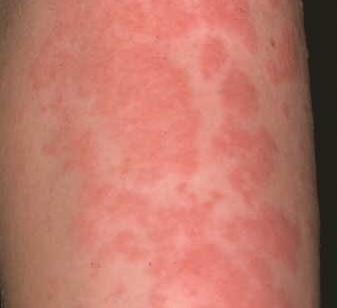
Hives, or the medical term ‘Urticaria’ is a common allergic reaction on the skin. It is characterized by raised, red skin welts that are more than 5mm in diameter. Hives are extremely itchy, and often have a pale border surrounding the red area. The urticarial rash can be isolated or many, sometimes they join together and form a large area of raised, red rash.
Statistics on Hives (Urticaria)
Urticaria is a common disease – it affects up to 25% of the general population.
Risk Factors for Hives (Urticaria)
There is no specific predisposing factors for urticaria. Geographical regions do not have any influence on cases of urticaria. The number of cases are similar internationally.
Acute urticaria happens equally in men and women; but chronic urticaria seemed to be more common in women.
Urticaria happens in all ages, but chronic urticaria is more common in the 40-50s.
Progression of Hives (Urticaria)
Urticaria is divided into 2 forms according to the duration of disease:
- acute: lasting
- chronic: lasting >6 weeks
Acute urticaria is more common than chronic one. More than two-thirds of the cases of urticaria are acute. The rashes of acute urticaria are characterised by a rapid onset and rapid resolution within several hours. A trigger can occasionally be identified.
As for chronic urticaria, it account for approximately 30% of the cases. Clinically both acute and chronic forms are indistinguishable. However resolution time in chronic urticaria is longer – sometimes up to 36 hours before resolution.
The following are the recognised causes or associations of urticaria:
- autoimmune diseases: thyroid diseases
- drugs: antibiotics (penicillins, etc), sulfur containing medications, progesterone (oral contraceptive pills, hormone replacement therapy), local anaesthetic agents, opiates, etc.- physical contact: animal saliva, plant products, resins, raw fish, vegetables, latex, metals (nickel)
- stinging insects: bees, wasps, hornets
- aeroallergens: allergens that travels in the air, like pollens, grass, weeds.
- foods: milk, egg, peanuts, nuts, soy, wheat
- infections: acute bacterial and viral infections such as Coxsackie A/B, hepatitis A/B/C, parasitic infections
- physical agents: pressure, cold, heat (in exercise, sweating, hot showers causing cholinergic urticaria)
How is Hives (Urticaria) Diagnosed?
The diagnosis of urticaria is based on the signs and symptoms of the patient, and the history of exposure to allergens. Therefore it does not rely on laboratory testing.
Prognosis of Hives (Urticaria)
Urticaria causes significant distress in terms of the symptoms produced, however prognosis is excellent as it is not life-threatening. Acute urticaria is usually self-limited with resolution occurring within 24 hours. Chronic urticaria lasts for more than 6 weeks, hence it can cause significant distress to the patient. However, urticaria does not results in any long term complications.
How is Hives (Urticaria) Treated?
There is no cure for urticaria, the treatment aims at symptom control only. Regardless of the cause of urticaria, the treatment options are generally successful in controlling the symptoms.
Depending on the severity of urticaria, the following treatment options can either be given alone or with combination:
- allergen avoidance: prevention and avoidance of known triggers are the mainstay of treatment. This include limiting outdoor exposure, shutting windows, avoiding the drugs that are identified, etc.
- antihistamines: this class of drugs directly blocks the action of histamine, the major substance responsible for urticaria. It is effective in reducing symptoms such as itchiness (this is the most distressing symptoms for patients with urticaria). Antihistamines include fexofenadine, loratadine and cetirizine.
- steroids: steroids has limited use in most patients with acute urticaria. In individuals who have persistent or recurrent attacks of acute urticaria (or associated with angioedema), they may respond to steroid therapy. Steroids should only be used after a trial of maximal dose of antihistamines.
Treatment should include treating the underlying diseases if found any. This will be discussed in separate topics.
Hives (Urticaria) References
- eMedicine: Urticaria [online]. 2005. [Cited 2005 October 13th]. Available from: URL: http://www.emedicine.com/emerg/topic628.htm
- Kumar V, et al. Robbins and Cotran Pathologic Basis of Disease. 7th ed. New York: WB Saunders Company; 2004.
- Up to Date: Etiology and diagnosis of urticaria [online]. 2005. [Cited 2005 October 13th]. Available from: URL: http://www.utdol.com/application/topic.asp?file=allergy/9917&type=A&selectedTitle=1~50
- Up to Date: Treatment of urticaria [online]. 2005. [Cited 2005 October 13th]. Available from: URL: http://www.utdol.com/application/topic.asp?file=allergy/10953
- Zuberbier, T. Urticaria. Allergy 2003; 58:1224.
All content and media on the HealthEngine Blog is created and published online for informational purposes only. It is not intended to be a substitute for professional medical advice and should not be relied on as health or personal advice. Always seek the guidance of your doctor or other qualified health professional with any questions you may have regarding your health or a medical condition. Never disregard the advice of a medical professional, or delay in seeking it because of something you have read on this Website. If you think you may have a medical emergency, call your doctor, go to the nearest hospital emergency department, or call the emergency services immediately.
Related Articles

Alzheimer’s disease is a progressive neurological disorder that…

Obstructive sleep apnoea (OSA) is a prevalent and…

Digestive conditions are prevalent and can significantly impact…
Need a health appointment?
Find and book a doctor, dentist, physio and more on Healthengine
Find a practitioner