- What is Insect Stings (Bee Sting, Spider Bites)
- Statistics on Insect Stings (Bee Sting, Spider Bites)
- Risk Factors for Insect Stings (Bee Sting, Spider Bites)
- Progression of Insect Stings (Bee Sting, Spider Bites)
- Symptoms of Insect Stings (Bee Sting, Spider Bites)
- Clinical Examination of Insect Stings (Bee Sting, Spider Bites)
- How is Insect Stings (Bee Sting, Spider Bites) Diagnosed?
- Prognosis of Insect Stings (Bee Sting, Spider Bites)
- How is Insect Stings (Bee Sting, Spider Bites) Treated?
- Insect Stings (Bee Sting, Spider Bites) References
What is Insect Stings (Bee Sting, Spider Bites)
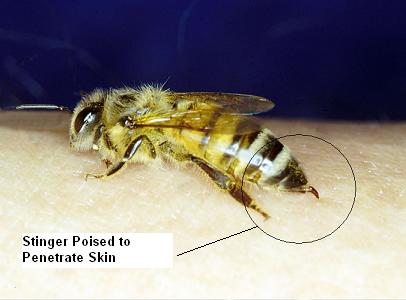
Bee sting and wasp sting happen commonly, bee sting and wasp sting are one of the clinical encounters that are exaggerated and mystified in movies and medias. Bee sting and wasp sting are mostly benign and harmless, but with massive bee and wasp sting they can be life-threatening. Also if anaphylaxis occurs, this can be from minimal stings and be life-threatening.
Insect stings can be due to the following:
- bee sting
- wasp sting
- ants
The commonest would be stings due to insects from the Hymenoptera group. This group includes bees, vespids (wasps, yellow jackets, hornets), and ants.
Statistics on Insect Stings (Bee Sting, Spider Bites)
Insect stings are extremely common. In the US, 9.3 million people are stung by ants each year. Other Hymenoptera sting accounts for more than 1 million stings annually.
Risk Factors for Insect Stings (Bee Sting, Spider Bites)
There is no racial predilection in Hymenoptera sting, and the bee and wasp sting affects all ages and genders. However reports indicated that men are affected by bee and wasp stings more than women, probably because of more frequent exposure rather than any biological differences.
Progression of Insect Stings (Bee Sting, Spider Bites)
The different types of reactions from insect bites and bee stings can be described as below:
- local reactions: after the insect bite or bee sting, the typical lesion is characterised by bee sting marking. Within minutes of the insect bite, local inflammation occurs, leading to local bright red tender nodule with subsequent hardening. Sometimes it can be accompanied by adjacent red plaques. The reaction of the insect bite often subsides in a few hours. As opposed to insect bites, bee & wasp stings are often painful, ranging from mild pain to severe, extreme pain. Not all local reactions subside quickly – for some individuals, large local reactions can occur with swelling that lasts from 48 hours to 1 week.
- Toxic systemic reactions: this is due to venom injection through insect stings. This can be difficult to distinguish from systemic allergic reactions as the signs and symptoms are relatively similar.
- Systemic allergic reactions: this happens through the typical type I hypersensitivity mechanism. Typical reactions include skin hives, angioedema and anaphylaxis reaction.
- Delayed reactions: this happens through type III hypersensitivity mechanism (see Introduction and type 3 hypersensitivity reaction). This can lead to a condition called serum sickness, and typically occurs days or weeks after the sting. With serum sickness, generalised inflammation of the different organ systems can occur, causing inflammation of the blood vessels, nerves, brain, kidneys, and clotting abnormalities.
How is Insect Stings (Bee Sting, Spider Bites) Diagnosed?
If the reactions to bee & wasp stings are severe enough, basic investigations may be done to rule out other medical conditions. These include looking at the blood function, liver function, kidney function and blood electrolytes.
Prognosis of Insect Stings (Bee Sting, Spider Bites)
Although mystified in movies and media, bee stings and wasp stings are generally benign. Localised reactions are harmless. In Australia, the death rate due to wasp sting is at the figure of 0.02 deaths per million population per year. All deaths were attributable to anaphylaxis rather than envenomation.
Anaphylaxis is always life-threatening but it happens very rarely.
How is Insect Stings (Bee Sting, Spider Bites) Treated?
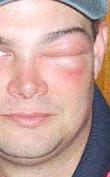
Bee sting & wasp sting treatment is symptomatic. Below are the different treatment options depending on the types of sting reactions:
- local reactions: cleaning of the bee sting site, application of ice to bee sting site to reduce inflammation, and removal of the stinger with its venom sack to avoid continued injection of venom. Local symptoms such as itching and burning sensation can be treated with antihistamines (such as diphenhydramine, cetirizine). Sometimes steroids that can be applied locally are used (such as dexametasone, triamcinolone, etc) to reduce inflammation. Antibiotics can be used if infection develops.
- allergic bee sting reactions: this is treated as in any other type 1 hypersensitivity reaction, including ant-histamines, steroids for late phase reactions and adrenaline for life-threatening reactions like angioedema and anaphylaxis.
For massive bee sting attacks, acute treatment involves prompt removal of the stingers to reduce further envenomation. Treatment is entirely dependent on symptoms produced.
The mainstay of bee sting treatment is actually protective measures to prevent bee stings, especially if patients are known to have allergic reactions before. Insect repellents are not effective against stinging Hymenoptera. Avoidance is the best measure.
Insect Stings (Bee Sting, Spider Bites) References
- Antonicelli, L, Bilo, MB, Bonifazi, F. Epidemiology of hymenoptera allergy. Curr Opin Allergy Clin Immunol 2002; 2:341.
- eMedicine: Bee and Hymenoptera Stings [online]. 2005. [Cited 2005 October 21st]. Available from: URL: http://www.emedicine.com/emerg/topic55.htm
- McGain et al. Wasp sting mortality in Australia. MJA 2000; 173:198-200.
- Reisman, RE. Insect stings. N Engl J Med 1994; 331:523.
- Up to Date: Insect Stings [online]. 2005. [Cited 2005 October 21st]. Available from: URL: http://www.utdol.com/application/topic.asp?file=allergy/2070&type=A&selectedTitle=1~4
- Valentine, MD. Anaphylaxis and stinging insect hypersensitivity. JAMA 1992; 268:2830.
All content and media on the HealthEngine Blog is created and published online for informational purposes only. It is not intended to be a substitute for professional medical advice and should not be relied on as health or personal advice. Always seek the guidance of your doctor or other qualified health professional with any questions you may have regarding your health or a medical condition. Never disregard the advice of a medical professional, or delay in seeking it because of something you have read on this Website. If you think you may have a medical emergency, call your doctor, go to the nearest hospital emergency department, or call the emergency services immediately.
Related Articles

Alzheimer’s disease is a progressive neurological disorder that…
Obstructive sleep apnoea (OSA) is a prevalent and…
Digestive conditions are prevalent and can significantly impact…
Need a health appointment?
Find and book a doctor, dentist, physio and more on Healthengine
Find a practitioner