- What is Kidney Cancer (Renal Cell Carcinoma; RCC)
- Statistics on Kidney Cancer (Renal Cell Carcinoma; RCC)
- Risk Factors for Kidney Cancer (Renal Cell Carcinoma; RCC)
- Progression of Kidney Cancer (Renal Cell Carcinoma; RCC)
- Symptoms of Kidney Cancer (Renal Cell Carcinoma; RCC)
- Clinical Examination of Kidney Cancer (Renal Cell Carcinoma; RCC)
- How is Kidney Cancer (Renal Cell Carcinoma; RCC) Diagnosed?
- Prognosis of Kidney Cancer (Renal Cell Carcinoma; RCC)
- How is Kidney Cancer (Renal Cell Carcinoma; RCC) Treated?
- Kidney Cancer (Renal Cell Carcinoma; RCC) References
What is Kidney Cancer (Renal Cell Carcinoma; RCC)
Kidney cancer, or renal cell cancer (RCC), originates from the cells of the outer layer of the kidney, the renal cortex. There are many types of RCCs and each type is derived from a different cell lineage and has its own distinct characteristics. Recognition that RCC is a collection of different cancer sub-types rather than a single disease has allowed the development of more specific treatments.
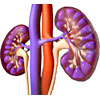 |
For more information about the anatomy of the kidneys, including diagrams and descriptions for how they work, see Urinary System (Renal System). |
There are three main types of RCCs:
- Clear cell RCCs – these are the most common form of renal cell carcinoma, accounting for 75–85% of these tumours. The name for this type of RCC comes from the fact that the cells within the tumour are mostly clear.
- Papillary cell RCCs – the second most common form, accounting for 10–15% of these tumours. Papillary cells are distinguished by small rounded protuberances on their surface. These tumours present as either Type 1 or the more aggressive Type 2 forms.
- Chromophobe cell RCCs – the third most common form of renal cell carcinoma (RCC), accounting for 3–5% of these tumours. The term chromophobe comes from the fact that these cells don’t take coloured stain very easily.
 |
|
Statistics on Kidney Cancer (Renal Cell Carcinoma; RCC)

Renal cell carcinoma accounts for 2–3% of all adult cancers. It is the 7th and 9th most common cancer in men and women respectively. It is estimated that 209,000 new cases and 102,000 deaths due to all RCCs occur annually worldwide. The gap between higher rates in men and lower rates in women appears to be narrowing over time.
The overall incidence of renal cell cancer is rising. This is partly due to a rise in the incidental detection of small RCC tumours that do not cause symptoms, which is generally attributed to the increased use of medical imaging. But it has been proven that the increase in incidence cannot be entirely attributed to improvements and greater use of medical imaging.
Risk Factors for Kidney Cancer (Renal Cell Carcinoma; RCC)

Several risk factors are known to increase the risk of developing sporadic (non-familial) RCC including higher body mass index, high blood pressure and cigarette smoking. Women who have undergone a hysterectomy are at a slightly increased risk of RCC, particularly if they are less than 44 years of age at the time of hysterectomy. Other likely or possible predisposing factors include unopposed oestrogen therapy (therapy which only includes oestrogen without progesterone), occupational exposure to petroleum products, heavy metals or asbestos, acquired polycystic kidney disease associated with chronic renal insufficiency, chronic haemodialysis (filtering an individual’s blood with a machine outside of the body) and analgesic abuse nephropathy.
RCCs can occur spontaneously, but many are associated with other medical illnesses, known as the renal cell carcinoma syndromes:
- von Hippel-Lindau syndrome;
- Hereditary papillary renal cell cancer syndrome;
- Hereditary leiomyomatosis (the occurrence of benign growths in muscle tissue);
- Birt-Hogg-Dubé syndrome (a condition characterised by non-cancerous tumours of the hair follicles); and
- Tuberous sclerosis.
Symptoms of Kidney Cancer (Renal Cell Carcinoma; RCC)
Different types of RCCs have different characteristic features; however, most RCCs are singular (unifocal) and found in a single kidney (unilateral). Special investigations are required to confirm RCC sub-types, as macroscopic appearance can be misleading. Clear cell RCCs are usually a solitary, unilateral, bright yellow tumour (on account of the abundant fat within it). Most clear cell RCCs are well-circumscribed (have defined edges) and infrequently invade the surrounding tissues. Papillary RCCs are usually solitary tumours with a thick capsule, but they can present as multiple tumours and/or in both kidneys. Chromophobe cell RCCs are generally well-circumscribed, tan brown and are occasionally multi-focal or bilateral.
|
For more information about the different types of RCC and how they are differentiated, see RCC Subtypes. |
All RCCs are classically associated with a triad of clinical symptoms: loin pain, a palpable (can be felt when pressing on the area) kidney mass and blood in the urine (haematuria). However, 25–30% of individuals have advanced (metastatic) disease at the time of diagnosis. Haematuria develops as the RCC invades the urinary collecting system, potentially causing clots or discomfort. When RCCs are palpable, they are usually a painless, firm mass.
People with RCC can present with local (confined to one area of the body) or systemic (affecting the whole body) symptoms, depending on the degree of cancer advancement. Common signs and symptoms include anaemia, liver dysfunction, haematuria, weight loss, low protein (hypoalbuminaemia), flank pain, malaise, high calcium (hypercalcaemia) or anorexia. There is a wide range of other medical syndromes associated with RCCs, including those due to the release of parathyroid hormone-related peptide (PTHrP) from the tumour.
Clinical Examination of Kidney Cancer (Renal Cell Carcinoma; RCC)
 Clear cell RCCs are so called due to the transparent, clear cytoplasm seen within a well-defined cell border. Some cells also contain fine, granular material around the cell nucleus. Papillary cell carcinoma is so called due to the microscopic cellular growth pattern of the tumour which results in rounded protuberances from the cell surface. The cell cytoplasm can be partially clear (as opposed to the totally clear, transparent cytoplasm of clear cell carcinoma). Chromophobe cell RCCs contain cells that are usually large and lie in a sheet-like or alveolar (as found in the lungs) architecture.
Sarcomatoid (spindle shaped) cells are considered a variant of many types of RCC. They can occasionally be seen in clear cell RCC and are a sign of a poorer prognosis in chromophobe RCCs. Inflammation is usually not seen in RCCs in the absence of cell death.
The average age at diagnosis of clear cell carcinoma is 60–64 years old and is more common in men. Only 7% of affected individuals are under 40 and it is rarely seen in children. Those people with papillary cell RCCs typically present in the 3rd to 8th decades of life and it is also more common in males. Chromophobe RCC is diagnosed mainly in 6th decade of life and incidence is similar in both men and women. RCCs are also more common in black populations.
Metastatic clear cell RCCs most commonly spreads to the lungs, intra-abdominal lymph nodes, bone, brain and liver. Comparatively, the lung is the commonest site of spread for papillary RCC. Metastatic disease in chromophobe RCC is most commonly to the liver and lung.
How is Kidney Cancer (Renal Cell Carcinoma; RCC) Diagnosed?
Detection of RCCs is increasing due to more widespread use of abdominal medical imaging. Consequently, RCCs are increasingly being detected incidentally as small tumours on abdominal imaging rather than as advanced disease. Despite this, a quarter to a third of individuals with RCC have metastatic disease at first presentation.
Imaging
Although RCCs are often incidentally detected on abdominal ultrasound, CT or magnetic resonance imaging (MRI) are better suited to giving detailed information of a known RCC. A solid tumour in the kidney will be more clearly visible on a CT scan with contrast. Features suggestive of malignancy include calcification, abnormal density, septations (divisions), nodularity (outgrowths) and wall thickening. Despite this, differentiation of a malignant RCC from a benign renal tumour on the basis of imaging alone can be difficult.
The American College of Radiology recommends the most appropriate tests for RCC staging:
- Multidetector, multiphasic CT of the abdomen, including CT angiography (using x-rays to visualise blood flow in blood vessels);
- Chest x-ray;
- Magnetic resonance angiography (MRA) of the abdomen;
- For tumours > 3 cm, CT of the chest.
MRI may be used when results of CT are unsatisfactory or contrast cannot be utilised. MRI will also identify the extent of invasion of tumours into blood vessels. If tumour invasion of major blood vessels is suspected, MRI scanning with gadolinium (a chemical which helps provide extra contrast in the image) is superior to CT. Comparatively, renal arteriography is rarely performed as part of RCC diagnosis.
Bone scans and Positron Emission Tomography (PET)
PET bone scans may be performed if individuals with RCC have bone pain or elevated blood markers suggesting that there may be bone invasion. PET may be more sensitive than bone scans to detect cancer spreading to the bones. However, PET is more expensive and is not generally used routinely.
Tissue Sampling
Making an accurate histological diagnosis to distinguish malignant from benign kidney lesions requires tissue sampling, such as a biopsy or tissue resection. Biopsy of metastatic disease may be more accessible than biopsy of the primary tumour.
Resection generally requires removal of all or part of the kidney (total or partial nephrectomy), providing both confirmatory tissue diagnosis and definitive treatment. Solid renal masses are generally not routinely biopsied prior to resection.
TNM Staging
The TNM staging system is used to measure and classify the degree of advancement of renal cell cancer and which helps to determine how serious the cancer is. The TNM system depends on characteristics of the tumour (T), involvement of lymph nodes (N) and metastatic disease (M). Stages I to III are considered localised disease and Stage IV is advanced disease.
Tumour
The first section of the TNM staging system refers to the invasiveness and type of the primary tumour.
|
TX |
Primary tumour cannot be assessed |
|
T0 |
No evidence of primary tumour |
|
T1 |
Tumour is confined to kidney; 7 cm or less in greatest dimension |
|
T1a |
Tumour is confined to kidney; tumour is < 4 cm in diameter |
|
T1b |
Tumour is confined to kidney; tumour is 4 to < 7 cm in diameter |
|
T2 |
Tumour is confined to the kidney and is greater than 7 cm in diameter |
|
T2a |
Tumour > 7 to 10 cm in greatest dimension, limited to the kidney |
|
T2b |
Tumour > 10 cm, limited to the kidney |
|
T3 |
Tumour extends into major veins or perinephric tissues but not into the adrenal gland and not beyond Gerota’s fascia (the layer surrounding the kidney) |
|
T3a |
Tumour penetrates through capsule into surrounding tissue (including fat and adrenal glands) but not beyond Gerota’s fascia |
|
T3b |
Tumour extends into the vena cava (a large vein flowing into the right atrium) below the diaphragm |
|
T3c |
Tumour extends into the vena cava above the diaphragm or invades the wall of the vena cava |
|
T4 |
Tumour invades beyond Gerota’s fascia |
Lymph Nodes
The second section refers to the degree of regional (in the same area) lymph node metastasis (where the cancer has spread to other sites, in this case to the lymph nodes).
|
N0 |
No regional lymph node metastasis |
|
N1 |
Regional lymph node metastasis |
Distant Metastasis
The third section refers to the degree of distant metastasis.
|
M0 |
No distant metastasis |
|
M1 |
Distant metastasis |
|
Stage |
TNM |
|
Stage I |
T1 N0 M0 |
|
Stage Ia |
T1a N0 M0 |
|
Stage Ib |
T1b N0 M0 |
|
Stage II |
T2 N0 M0 |
|
Stage IIa |
T2a N0 M0 |
|
Stage IIb |
T2b N0 M0 |
|
Stage III |
T1-T3 N1 M0T3 N0 M0 |
|
Stage IV |
T4 Any N M0Any T AnyN M1 |
The estimated 5-year survival rates for RCC by stages are:
- Stage I – 96%
- Stage II – 82%
- Stage III – 64%
- Stage IV – 23%
Prognosis of Kidney Cancer (Renal Cell Carcinoma; RCC)
The overall prognosis for RCC depends on its stage and degree of advancement at the time of diagnosis. 40–50% of individuals with RCC will develop metastatic disease, which is associated with a poorer prognosis. Clear cell RCC has a poorer prognosis than other RCC types. However, there is no significant difference between clear and papillary renal cell cancers; 5-year survival rates are estimated at 50–69%. Chromophobe cell carcinoma generally has a less aggressive clinical course and has a more favourable prognosis compared with clear cell RCCs, and has a slightly better or similar survival compared with papillary carcinoma.
|
For more information about the different types of RCC and how they are differentiated, see RCC Subtypes. |
How is Kidney Cancer (Renal Cell Carcinoma; RCC) Treated?
 Surgical treatment for non-metastatic clear cell RCC is intended to be curative; however, surgery for metastatic clear cell RCC also appears to improve survival. Surgical options include nephron-sparing surgery, partial nephrectomy, radical nephrectomy or thermal ablation (destroying tissue by the application of heat). Partial nephrectomy is usually possible if tumours are less than 4 cm in diameter.
Localised (Stages I–III) Disease
Given Stage Ia and Ib tumours are small and localised, surgical removal by partial nephrectomy is recommended, whether by an open or laparoscopic (also known as “key hole” surgery) procedure. If a tumour cannot be removed by partial nephrectomy, total removal (radical nephrectomy) is appropriate. If individuals have a reduced life expectancy or significant other illnesses, it may be more appropriate to monitor a person with Stage 1a disease rather than intervene surgically. Thermal ablation is associated with an increase risk of the tumour recurring locally.
In Stage II and III disease, partial nephrectomy is generally not suitable and radical nephrectomy is preferable. If the tumour extends into a major blood vessel (such as the inferior vena cava), radical nephrectomy is essential and clots may have formed inside those vessels.
20–30% of individuals with localised disease will relapse after surgical removal of tumours, most of which will occur within 3 years. There is currently no role for the use of drugs or radiotherapy treatments after removal of the tumour in localised disease, as these have shown no clear benefit.
Individuals should be followed up and investigated regularly, in accordance with their individual diagnosis, staging and management plan.
Advanced (Stage IV) Disease
Individuals with stage IV disease may benefit from surgery despite the degree of metastatic spread. For example, individuals with a resectable primary RCC with a solitary resectable metastasis, or those people developing a single metastatic site after nephrectomy. However, recurrence of a solitary metastasis is usually followed by recurrence at the primary or metastatic site. Radiotherapy for a solitary bony metastasis has also been shown to improve survival. Reducing the volume of the tumour (cytoreductive nephrectomy) before systemic therapy has also been shown to improve survival, depending on individual selection.
Drug therapies for metastatic RCC are limited. IFN-alpha and IL-2 therapy have potent anti-RCC activity. However, they cause significant toxicity and the clinical benefit has been modest. Targeted biological therapies using tyrosine kinase inhibitors are increasingly in use. This includes multiple receptor tyrosine kinase (rtk) inhibitors (such as sunitinib, sorafenib and pazopanib), mammalian target of rapamycin (mTOR) inhibitors (such as temsirolimus and everolimus) and monoclonal antibody therapies (such as bevacizumab). For many of these drugs, clinical trials are ongoing.
 |
For more information about the treatment options that are available for RCC and how effective they are, see Treatments for Renal Cell Carcinoma (RCC). |
Kidney Cancer (Renal Cell Carcinoma; RCC) References
- Rini BI, Campbell SC, Escudier B. Renal cell carcinoma. Lancet. 2009; 373 (9669): 1119-32. [Abstract]
- Braunwald E, Fauci AS, Kasper DL, et al. Harrison’s Principles of Internal Medicine (15th edition). New York: McGraw-Hill Publishing; 2001. [Book]
- Grignon DJ, Che M. Clear cell renal cell carcinoma. Clin Lab Med. 2005; 25(2): 305-16. [Abstract]
- Cairns P. Renal cell carcinoma. Cancer Biomark. 2010; 9 (1-6): 461-73. [Abstract | Full Text]
- Presti JC, Rao PH, Chen Q, et al. Histopathological, cytogenetic, and molecular characterization of renal cortical tumors. Cancer Res. 1991; 51: 1544. [Abstract | Full Text]
- Stafford HS, Saltzstein SL, Shimasaki S, et al. Racial/ethnic and gender disparities in renal cell carcinoma incidence and survival. J Urol. 2008; 179: 1704. [Abstract | Full Text]
- Chow WH, Devesa SS, Warren JL, Fraumeni JF Jr. Rising incidence of renal cell cancer in the United States. JAMA. 1999; 281(17): 1628-31. [Abstract]
- Mandel JS, McLauglin JK, Schlegofer B, et al. International renal cell cancer study – IV Occupation. Int J Cancer. 1995; 61: 601. [Abstract]
- Chow WH, Gridley G, Fraumeni JF, Järvholm B. Obesity, hypertension, and the risk of kidney cancer in men. N Engl J Med. 2000; 343(18): 1305-11. [Abstract | Full Text]
- Altman D, Yin L, Johansson A, Lundholm C, Grönberg H. Risk of renal cell carcinoma after hysterectomy. Arch Intern Med. 2010; 170(22): 2011-6. [Abstract]
- Kabat GC, Silvera SA, Miller AB, Rohan TE. A cohort study of reproductive and hormonal factors and renal cell cancer risk in women. Br J Cancer. 2007; 96: 845. [Abstract | Full Text]
- McLaughlin JK, Blot WJ, Mehl ES, et al. Petroleum-related employment and renal cell cancer. J Occup Med. 1985; 27: 672. [Abstract]
- Maclure M. Asbestos and renal adenocarcinoma: A case-control study. Environ Res. 1987; 42: 353. [Abstract]
- Brennan J, Stilmant M, Babayan R, Siroky M. Acquired renal cystic disease: implications for the urologist. Brit J Urol. 1991; 67(4): 342-348. [Abstract]
- Smith JW, Sallman AL, Williamson MR, Lott CG. Acquired renal cystic disease: Two cases of associated adenocarcinoma and a renal ultrasound survey of a peritoneal dialysis population. Am J Kidney Dis. 1987; 10: 41. [Abstract]
- McCredie M, Pommer W, McLaughlin JK, Stewart JH. International renal-cell cancer study II – Analgesics. Int J Cancer. 1995; 60: 345. [Abstract]
- Rakozy C. Kidney tumor – adult malignancies [online]. PathologyOutlines.com, Inc; 19 January 2012 [cited 1st April]. Available from: URL Link
- Vikram R, Ng CS, Tamboli P et al. Papillary renal cell carcinoma: radiologic-pathologic correlation and spectrum of disease. Radiographics. 2009; 29(3): 741-54. [Abstract | Full Text]
- Cohen HT, McGovern FJ. Renal-cell carcinoma. N Engl J Med. 2005; 353: 2477-90. [Abstract]
- Murphy WM, Beckwith JB, Farrow GM et al. Tumors of the kidney, bladder, and related structures (3rd edition). Washington, DC: Armed Forces Institute of Pathology; 1994. [Book]
- Reuter VE. The pathology of renal epithelial neoplasms. Semin Oncol. 2006; 33: 534–543. [Abstract]
- Bosniak MA, Birnbaum BA, Krinsky GA, Waisman J. Small renal parenchymal neoplasms: Further observations on growth. Radiology. 1995; 197: 587. [Abstract]
- Jemal A, Siegel R, Ward E et al. Cancer statistics, 2008. CA Cancer J Clin. 2008; 58: 71. [Abstract | Full Text]
- Prasad SR, Humphrey PA, Jay R, et al. Common and Uncommon Histologic Subtype of Renal Cell Carcinoma: Imaging Spectrum with Pathologic Correlation. Radiographics. 2006; 26: 1795-1810. [Abstract | Full Text]
- Mai KT, Landry DC, Robertson SJ, et al. A comparative study of metastatic renal cell carcinoma with correlation to subtype and primary tumor. Pathol Res Pract. 2001; 197(10): 671-5.[Abstract]
- Beck SD, Patel MI, Snyder ME, et al. Effect of papillary and chromophobe cell type on disease-free survival after nephrectomy for renal cell carcinoma. Ann Surg Oncol. 2004; 11: 71. [Abstract]
- Stec R, Grala B, Maczewski M et al. Chromophobe renal cell cancer–review of the literature and potential methods of treating metastatic disease. J Exp Clin Cancer Res. 2009; 28: 134. [Abstract | Full Text]
- Kumar P, Clark M (eds). Clinical Medicine (5th edition). Edinburgh: WB Saunders Company; 2002. [Book]
- Pinals RS, Krane SM. Medical aspects of renal carcinoma. Postgrad Med J 1962; 38: 507. [Abstract | Full Text]
- Lee CT, Katz J, Fearn PA, Russo P. Mode of presentation of renal cell carcinoma provides prognostic information. Urol Oncol. 2002; 7(4): 135-40. [Abstract]
- Warren KS, McFarlane J. The Bosniak classification of renal cystic masses. BJU Int. 2005; 95(7): 939-42. [Abstract | Full Text]
- Zhang J, Lefkowitz RA, Ishill NM, et al. Solid renal cortical tumors: differentiation with CT. Radiology. 2007; 244(2): 494-504. [Abstract | Full Text]
- Edge SB, Compton CC. The American Joint Committee on Cancer: the 7th edition of the AJCC cancer staging manual and the future of TNM. Ann Surg Oncol. 2010; 17(6): 1471-4. [Abstract | Full Text]
- Israel GM, Casalino DD, Remer EM, Arellano RS, Bishoff JT, Coursey CA et al. ACR Appropriateness Criteria indeterminate renal masses [Online]. American College of Radiology (ACR). August 30th 2011 [cited 30th March 2012]. Available from http://www.guideline.gov/content.aspx?id=32641
- Koga S, Tsuda S, Nishikido M, et al. The diagnostic value of bone scan in patients with renal cell carcinoma. J Urol. 2001; 166: 2126. [Abstract]
- Ramdave S, Thomas GW, Berlangieri SU, et al. Clinical role of F-18 fluorodeoxyglucose positron emission tomography for detection and management of renal cell carcinoma. J Urol. 2001; 166: 825. [Abstract]
- Motzer RJ, Agarwal N, Beard C, et al. NCCN Clinical Practice Guidelines in Oncology – Kidney Cancer[Online]. National Comprehensive Cancer Network. 16th February 2012 [cited 30th March 2012]. Available from www.nccn.org
- Bukowski R. Prognostic Factors for Survival in Metastatic Renal Cell Carcinoma. Cancer. 2009; 115(10): 2273-81. [Abstract | Full Text]
- Moch H, Gasser T, Amin MB, et al. Prognostic utility of the recently recommended histologic classification and revised TNM staging system of renal cell carcinoma: a Swiss experience with 588 tumors. Cancer. 2000; 89(3): 604-14. [Abstract]
- Sengupta S, Lohse CM, Leibovich BC, et al. Histologic coagulative tumor necrosis as a prognostic indicator of renal cell carcinoma aggressiveness. Cancer. 2005; 104(3): 511-20. [Abstract | Full Text]
- Gokden N, Nappi O, Swanson PE, et al. Renal cell carcinoma with rhabdoid features. Am J Surg Pathol. 2000; 24(10): 1329-38. [Abstract]
- Lee JH, Choi JW, Kim YS. The value of histologic subtyping on outcomes of clear cell and papillary renal cell carcinomas: a meta-analysis. Urology. 2010; 76(4): 889-94. [Abstract]
- Cheville JC, Lohse CM, Zincke H, et al. Comparisons of outcome and prognostic features among histologic subtypes of renal cell carcinoma. Am J Surg Pathol. 2003; 27(5): 612-24. [Abstract]
- Amin MB, Paner GP, Alvarado-Cabrero I, et al. Chromophobe renal cell carcinoma: histomorphologic characteristics and evaluation of conventional pathologic prognostic parameters in 145 cases. Am J Surg Pathol. 2008; 32(12): 1822-34. [Abstract]
- Flanigan RC, Mickisch G, Sylvester R, et al. Cytoreductive nephrectomy in patients with metastatic renal cancer: a combined analysis. J Urol. 2004; 171: 1071-1076. [Abstract]
- Fossa SD, Kjolseth I, Lund G. Radiotherapy of metastases from renal cancer. Eur Urol. 1982; 8: 340-342. [Abstract]
All content and media on the HealthEngine Blog is created and published online for informational purposes only. It is not intended to be a substitute for professional medical advice and should not be relied on as health or personal advice. Always seek the guidance of your doctor or other qualified health professional with any questions you may have regarding your health or a medical condition. Never disregard the advice of a medical professional, or delay in seeking it because of something you have read on this Website. If you think you may have a medical emergency, call your doctor, go to the nearest hospital emergency department, or call the emergency services immediately.
Related Articles

Alzheimer’s disease is a progressive neurological disorder that…

Obstructive sleep apnoea (OSA) is a prevalent and…

Digestive conditions are prevalent and can significantly impact…
Need a health appointment?
Find and book a doctor, dentist, physio and more on Healthengine
Find a practitioner